
Maybe it’s just because this is the only full decade I’ve been around for, but I can’t help feeling that the past ten years have been one of the most confusing times for big-budget games since the medium’s inception. Some absolutely revolutionary games have been released, ones that have pushed the medium forward in massive ways, but at the same time we’ve seen the industry suffer from bloated budgets, greedy corporations, and rushed releases aplenty. I still don’t think there’s ever been a better time to play video games, but it’s certainly had its drawbacks. For all those negatives, though, I still am strongly of the opinion that it’s been the best decade of video games to date, and it’s left me incredibly excited to see where we go from here. Writing this list has been an incredibly long and arduous process, but I’m finally happy with where it’s at. So, without further ado, let’s get into it.
25. Horizon: Zero Dawn
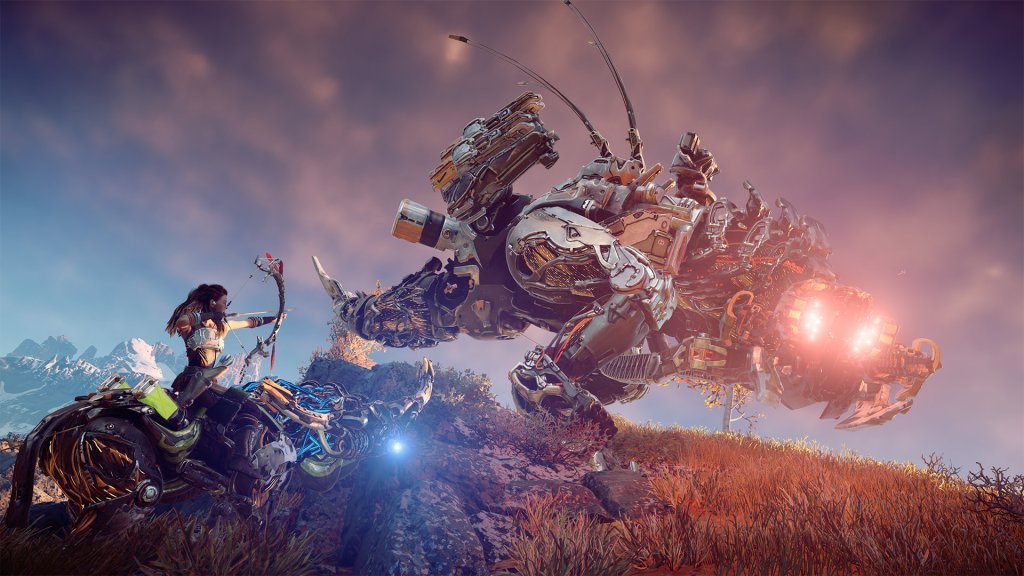
It’s hard to blame people for growing tired of the checklist-style open world genre popularized by Ubisoft this decade. It’s an easy style to churn out repeatedly, and lends itself to mindless repetition but for me personally, that repetition is what drives me, and locks me into a loop that I struggle to escape. Horizon: Zero Dawn is my favorite game in that style by a fair margin, with the help of its flexible combat system, lovable characters and dialogue, an effective story, and one of the most fascinating and beautiful worlds to come out of a video game, and possibly the most fleshed-out lore of any game on this list. It will be a hard showing to top in the upcoming sequel, Forbidden West, but Guerrilla Games has proven they are up to the task.
24. Fire Emblem: Three Houses
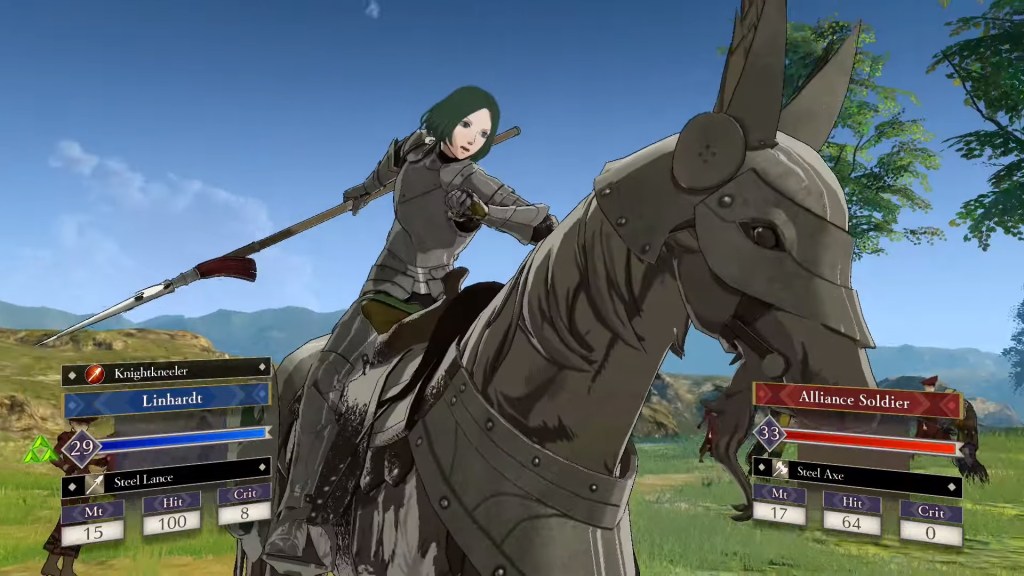
The Turn-Based Strategy genre has always been one I’ve respected deeply, but struggled to bring myself to pick up. It’s a genre densely packed with intricate mechanics, statistics and abilities to manage and memorize, and an absolutely unforgiving attitude towards mistakes. Fire Emblem: Three Houses is no different, but something about it (likely its deep connection the Smash Bros. series) enticed me enough to pick it up, and I’m glad I did. An intricate blend of a calendar-based life management sim and a brutal tactics experience ties up beautifully into a package that was impossible to put down. Every choice you make, from the interactions with your students outside of combat, to how many spaces you move them on the battlefield, can have a massive impact on the way the game will play from then on, and with the multiple different stories, you’ll be hard-pressed not to start another playthrough as soon as you’re done.
23. Divinity: Original Sin II
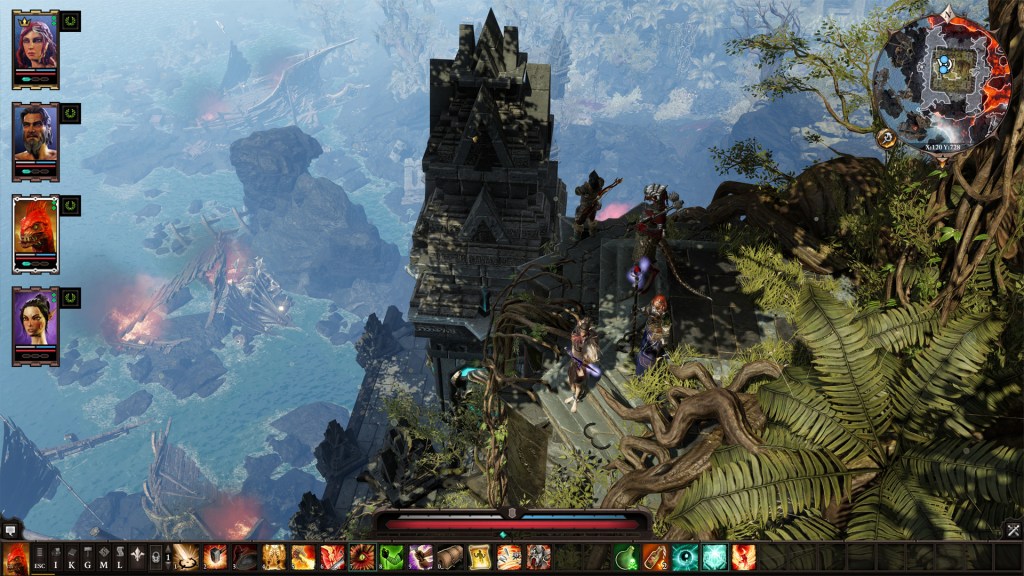
If there’s one term I would use to describe Divinity: Original Sin II, it would be ‘Open-Ended.’ In every single aspect, this massive CRPG does everything in its power to give the player absolute control, restricted only by their own wit, and the decisions that led them to that point. Much like Disco Elysium, a game I ranked fairly high on my indie games list, Divinity emulates the feeling of playing a tabletop RPG down to a T, perfectly replicating the feeling of adventuring through a world run by a human DM, with the answer to every question being “you can try!” With incredible writing filled with personality, and one of the most fleshed-out combat systems ever put in a turn-based RPG, the amount of depth and care that has been put into every aspect of the game is almost miraculous, especially for such a small and independently-owned team, and Larian has more than proved their status as a name to keep a close eye on.
22. Metal Gear Solid V: The Phantom Pain
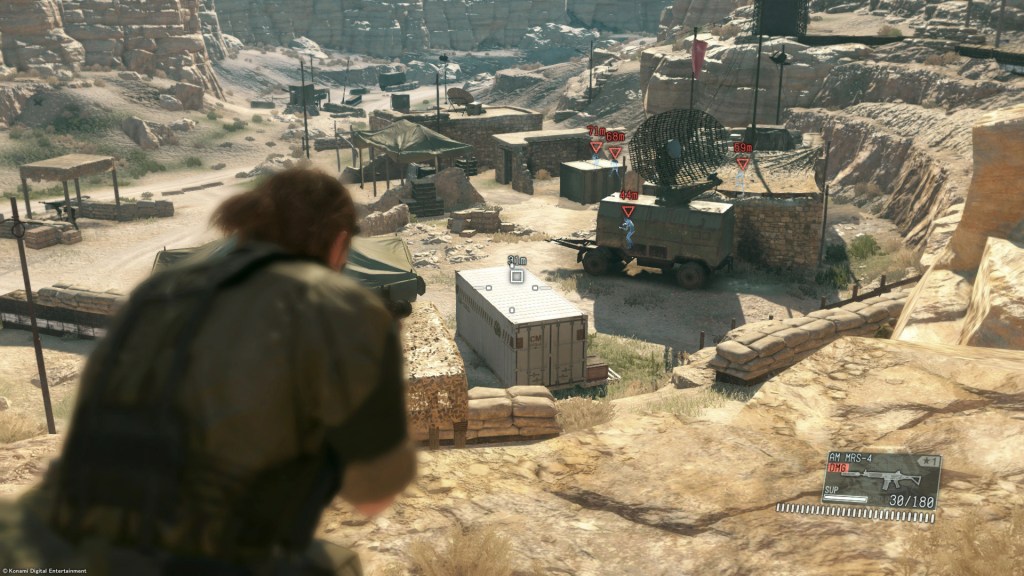
I get pretty sad when I talk about about The Phantom Pain. The Metal Gear Solid series is my favorite gaming franchise of all time, and Kojima is something of a hero in my mind – the ideal artist in big-budget game design. It feels almost like a punch in the gut, then, for both the franchise and Kojima’s ties to it to be so unceremoniously snuffed out. With that being said, Metal Gear Solid V is absolutely a strong point to end on, and easily the best playing game in the entire franchise. This is largely due to the fantastic use of open world, and my favorite stealth gameplay I’ve ever experienced. The level of freedom entrusted to the player is practically unparalleled, with each encounter being a mechanical sandbox to toy with however you please. What shortcomings there are in the plot are wholly made up for by the sheer magnitude of the story generator that is the gameplay. It’s unfortunate that the situation with Konami has gone down the way that it has, and with it taken my favorite franchise in games, but at the very least I can say that they went out with a bang.
21. Marvel’s Spider-Man
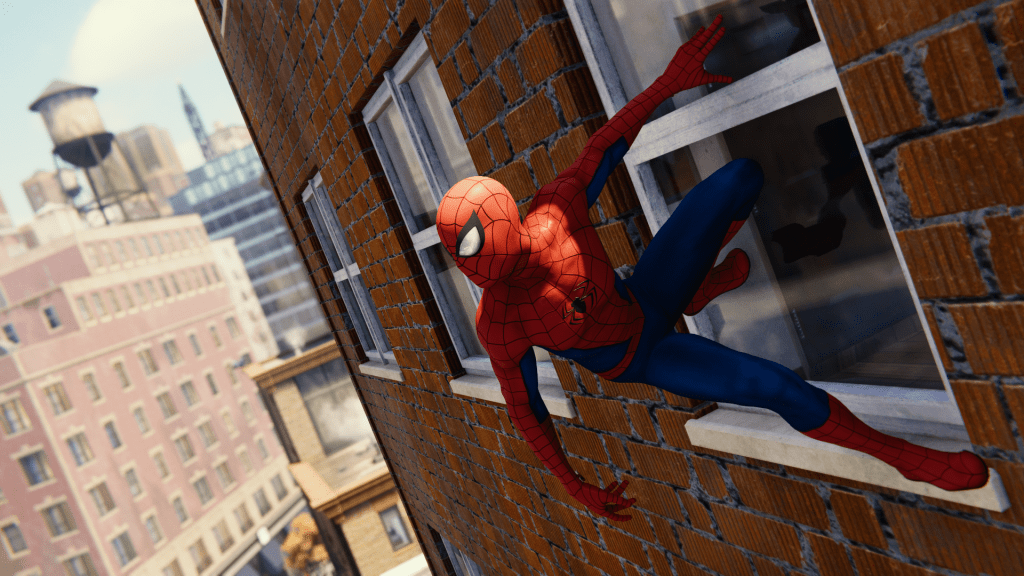
Disclaimer: This section will not include the phrase “feel like Spider-Man”
There is no superhero better suited to the open-world genre than Spider-Man. From his web-slinging mobility, to the locale he inhabits, to the vast array of villains he encounters, all of it seems tailor-made for a game like this one. Marvel’s Spider-Man is a nearly flawless execution on the ideal of the property, with an intimacy and scope taken right off the pages of a comic book, and the mechanical competence to stand high above its contemporaries. Movement works as a perfect flow state that never fails to be enjoyable, weaving between buildings and dashing up walls to traverse the dense Manhattan cityscape. There’s a fast travel mechanic in the game, sure, but I can’t imagine anyone ever choosing to use it over the obviously superior web-slinging. Combat works for a lot of the same reasons, as you bob and weave through enemies, knocking them out with a variety of gadgets and abilities. It feels like the standard Arkham-style melee combat at first, but it soon shows its true depth and space for creative expression. The story is the real shocker, though, with the best balance of Peter Parker’s personal struggles and Spider-Man’s world-saving I’ve seen in years, and a plot that escalates near-flawlessly. Insomniac’s run at the franchise is an unforgettable experience that truly succeeds in its mission to make you feel like Spider-Man.
Oops.
20. God of War
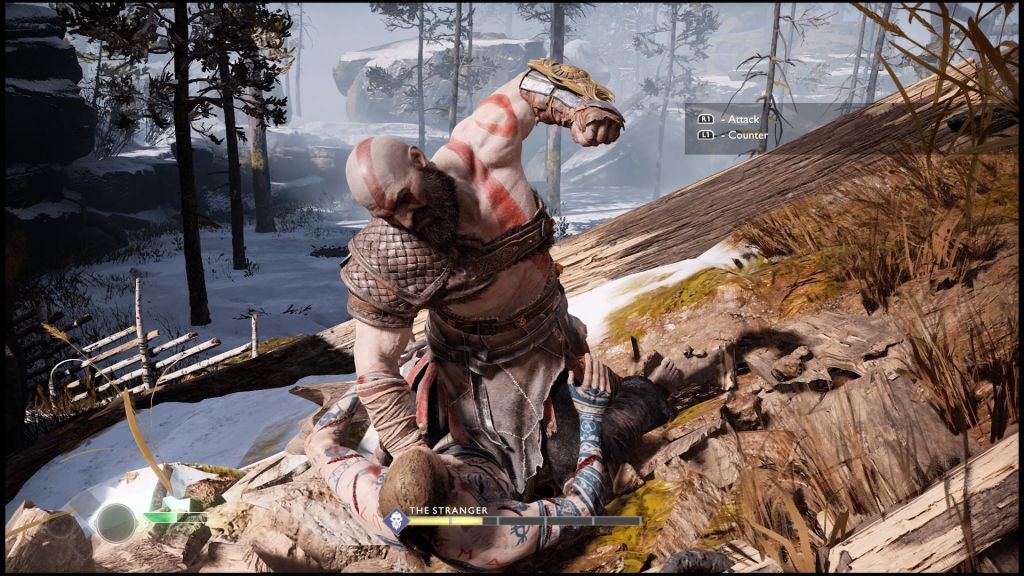
There’s a moment within the first twenty minutes of Santa Monica Studios’ God of War that reads to me as indicative of the whole of the game to come. It’s a small moment, one that many will forget, but it stuck with me across my multiple journeys through the Norse realms. A bearded Kratos and his young son Atreus prepare a funeral pyre for Atreus’ dead mother, and light the flame. In a fit of emotion, Atreus reaches and grabs his mother’s knife from the fire, burning his hand. Kratos is clearly upset, and teeters on the edge of snapping at Atreus, but instead he stops and realizes the pain his child is in. He bends down, places snow gently in his hand, and says “squeeze.”
This relationship is what defines God of War, it’s one of respect and anger, and one where Kratos has to come to terms with who his son is, and who he will have to raise him to be. For all the bombast of the franchise up to this point, bombast that is far from lost here, the game maintains a base level of somber understanding between the two characters, and through that contextualizes every element of the game clearly. Of course, I could go deeper into the gameplay, the visuals, and the story, and all of those things that are done incredibly well here, but to me it’s all secondary to the flawless sense of tone that God of War maintains.
19. Portal 2

In retrospect, following up the magic of the first Portal game must have been a nearly impossible task. Valve no longer had the element of surprise on their side, and a follow up to one of the tightest, most complete puzzle game packages ever made would need to not only live up to its predecessor, but also justify its own existence. Luckily, Portal 2 absolutely succeeds in that regard, offering a broader scope, an engaging plot that explores the history of Aperture Science, humorously off-kilter dialogue, and even more ambitious puzzles and use of the portal mechanic than last time around. At over double the length of the first game, Portal 2 could very easily have devolved into a grueling slog, but with a combination of smartly-paced mechanical additions, driving plot beats, and visual variety, the 8ish hours (if you’re good… which I am not,) of gameplay never feel like longer than they are. All of this applies doubly to the new co-op mode, offering a second campaign which utilizes all the mechanics of the singleplayer, and uses them in masterfully curated levels designed specifically with the assumption of four portals and two bodies in mind. As an overall package, Portal 2 is an undeniable powerhouse of a puzzle game, and a must-play for anyone interested in puzzle design, or even games generally.
18. Fallout: New Vegas
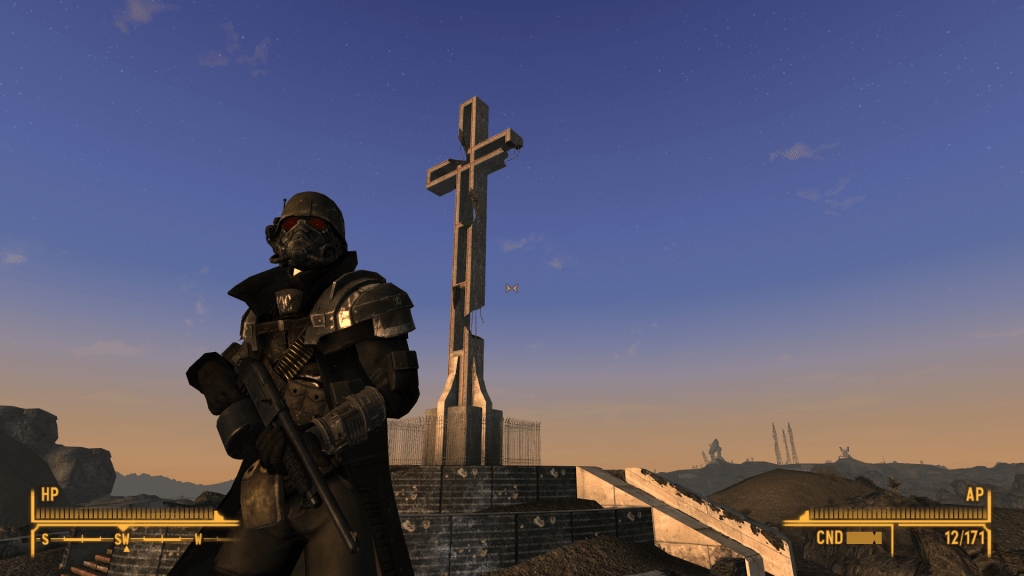
The Fallout series has long been a favorite of mine. From its roots as an isometric CRPG, to the Bethesda deal and the resulting Fallouts 3 and 4, I’m always able to find something to love. In a lot of ways, though, Obsidian Entertainment’s Fallout: New Vegas has stood high above the rest. As a game, New Vegas makes an array of much-needed improvements over Fallout 3, the game who’s engine it shares. From the addition of iron sights to minor accuracy improvements, New Vegas just feels better to play than its predecessor. If it were just a mechanical improvement, though, this game wouldn’t be anywhere near this list. New Vegas’ strength is its fantastic writing, engaging plot, and most of all a respect for the original source material. The setting of Fallout has always had a sense of tongue-in-cheek comedy to it, but it was always underpinned by a bleak understanding of the failings of late-stage capitalism, and of the horrors that come from war and greed taken to their logical extreme. For every punch that Bethesda pulls in that regard, Obsidian takes it on headfirst. From its main plot conflict, an obvious parody and criticism of America’s two-party system, to the socioeconomic turmoil left in the wake of Las Vegas’ glamor, Fallout: New Vegas preserves the message that previous games strove to portray, and improves on them with some of the funniest, deepest, and most genuine dialogue I’ve seen in a western RPG in recent years. It truly brings into perspective everything that Bethesda has done with the franchise since and, while I like those games as well, it’s difficult not to see them as disappointing in light of Obsidian’s masterwork.
17. The Legend of Zelda: Breath of the Wild
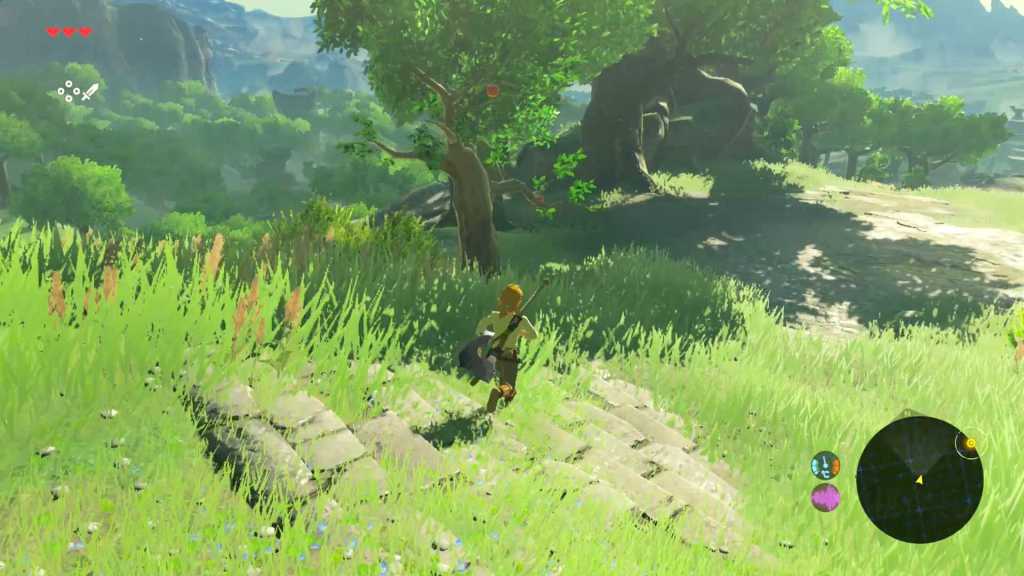
It shouldn’t be news to anyone that Nintendo has been fairly conservative with their leading IPs for a long time, and with such a high bar of quality to maintain, it’s not hard to see why. With experimentation comes risk, and while Nintendo has never been averse to new innovations in their hardware, their games seem to hold a sacred place in their dynamic as a company. All that changed, though, when the Wii U failed and Nintendo was seemingly on the doorstep of irrelevance. With the Switch, Nintendo needed to prove they had what it took to evolve with the times and push the boundaries the way they used to, and they needed a game to prove it. Breath of the Wild is that game, and in nearly every way it is the breath of fresh air that both the company and the industry as a whole needed. It would have been incredibly easy for Nintendo, in making their first open-world Zelda game, to take from the likes of Ubisoft and make a checklist open world game, one that I’m certain would be good but doubt would be special. Instead, they built something new from the ground up, pulling from what made the first game such a landmark and creating a wholly unique game with a profound understanding of its strengths. Freedom of expression is the name of the game here. From the moment you leave the Great Plateau and enter the open fields of Hyrule, everything is on the table. If you’re brave (or stupid) you can run straight to the final boss, even kill him if you’re good, or you can simply explore and climb towers to reveal the gargantuan map. You can engage in fun and expressive combat with a slew of enemies and a seemingly endless number of natural-feeling mechanics, or you can sneak past every enemy and just do the puzzles in the shrines. Many games boast the ability to do whatever you want in their worlds, but few reach the height of that power, and an understanding of the meaning behind it, like Breath of the Wild.
16. Tetris Effect
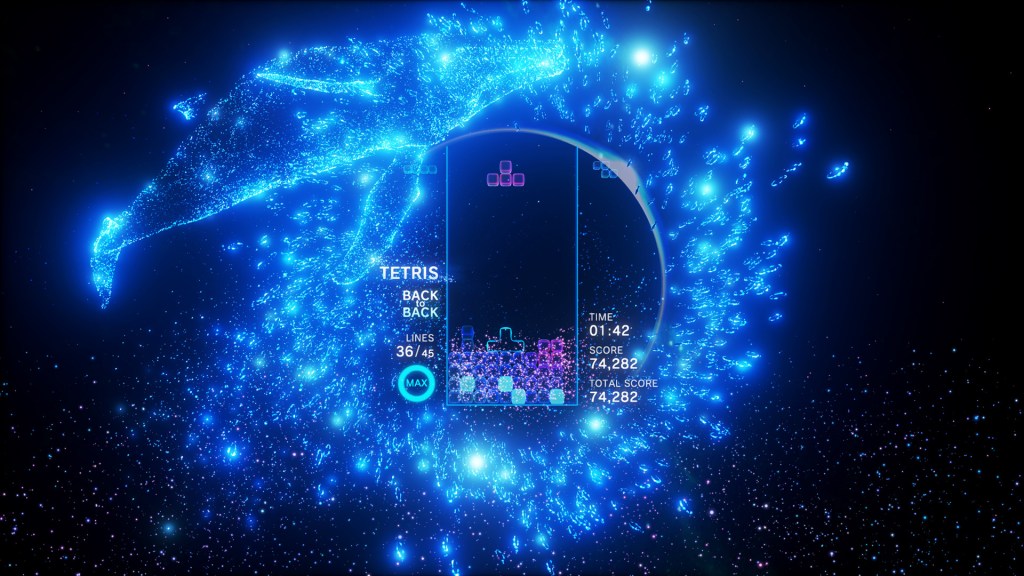
All personal bias and preference aside, I firmly believe that Tetris is the best game of all time. Every single element seems forged with mathematical precision to create a wholly flawless experience and, while that formula may not seem special now, it’s impossible to deny the sheer miracle of its existence. But with such a perfect formula, how can you possibly innovate upon it to keep it fresh? Developers struggled for decades with that question, piling on new mechanics in an attempt to make Tetris “more fun” and generally failing overall. In 2018, however, Lumines and Rez developer Tetsuya Mizuguchi took the helm and released an experience that is by far my favorite iteration of Tetris to date. In every element, Tetris Effect strives to be an experience. You can see it from the moment you open the game to its title screen, a massive view of the earth from orbit, and a single tetromino looms over everything. It’s cheesy to say, but seeing that for the first time playing in VR was a strangely emotional moment for me. Not nearly as emotional, however, as the act of playing through Tetris Effect’s Journey Mode, which is composed of 27 levels all with their own aesthetic and difficulty modifications. Playing through these levels in VR in one sitting is something I can only describe as a holistic experience, one that utterly transformed my view of VR as a platform, and of Tetris as a whole. It only lasts about two hours, but I have played those same two hours about a dozen times if I had to guess, and it absolutely never gets old. Of course there are challenge modes as well, ones I’ve also dumped countless hours into mastering, and ones that can truly test your mastery of the game with some of the most brutal difficulty I’ve seen in the series. Tetris Effect doesn’t modify anything about the core Tetris gameplay whatsoever, but by perfectly blending that core with a nearly unmatched sense of place and presence, a weight is given to the game that I can only describe as special.
 Writing About Music and Games Sometimes