
15. Call of Duty: Modern Warfare
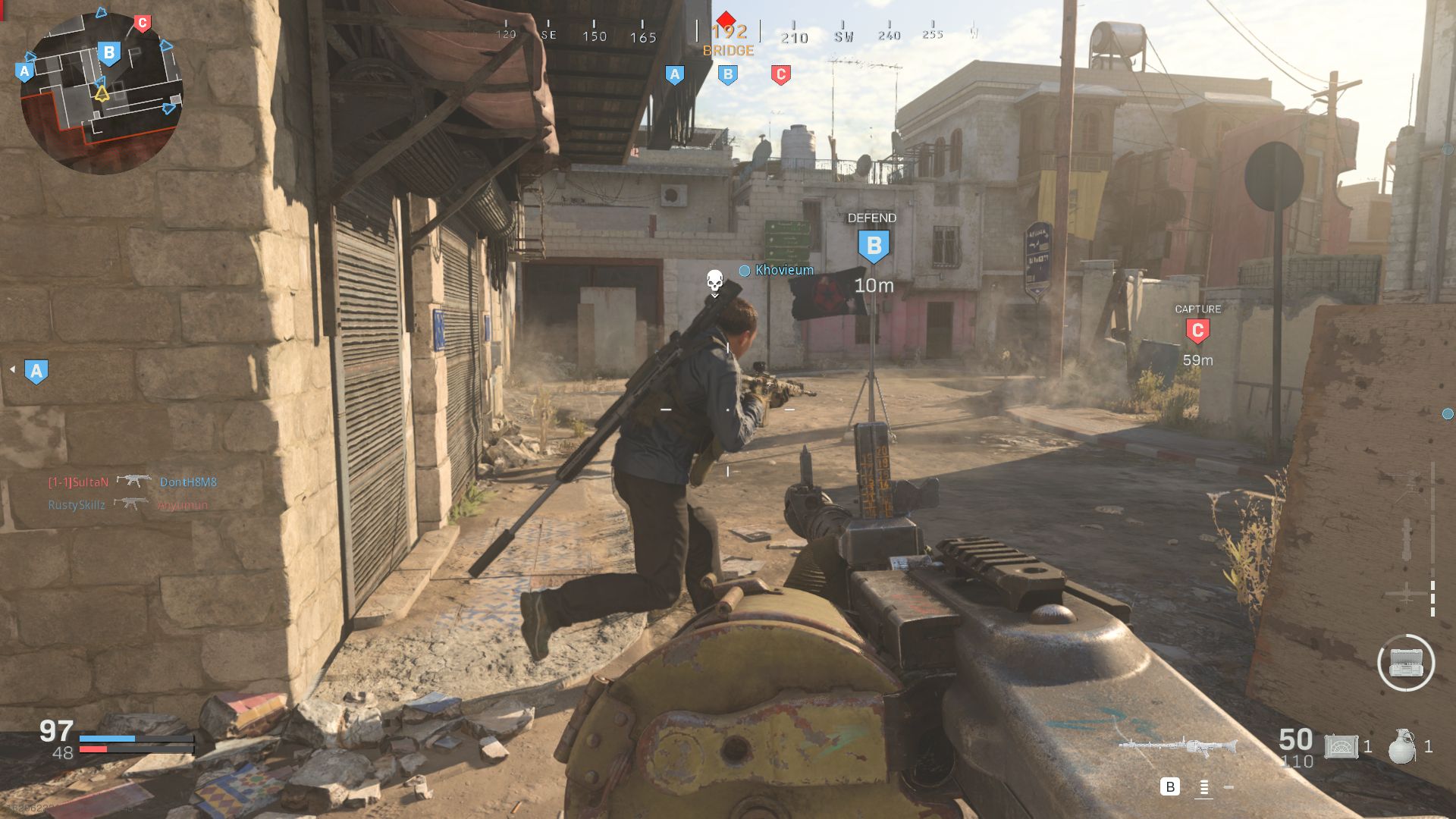
I will always have a soft spot for Call of Duty. No matter how repetitive it is and how cookie cutter the formula gets, my nostalgia always comes out on top and I end up picking up the new game a few months after launch. With Modern Warfare, however, I truly feel they hit on something special. Beyond the nostalgia-bait title and concept of rebooting their most beloved series, the game honestly feels like a fully realized evolution of the gameplay concepts that made those games so engaging, without reverting to more dated mechanics or design philosophies. Gunplay is quick, powerful, and always feels good to use in tandem with a more advanced version of the classic boots-on-the-ground movement, tweaked to add a sense of speed and mobility without the chaos of the future-set games. The rounds are always fast, action-packed, and evoke some sense of progression through either the unlock system, or through personal improvement. An enormous amount of my time with Modern Warfare, as in past Call of Duty games, playing 1v1 or free-for-alls in private matches with friends. Luckily for me, this game provides more than ample support for that style of play with well over a dozen maps designed specifically for low player counts (including the return of the classic map Rust.) Dozens of late nights have been spent yelling at friends either online or locally with splitscreen as close matches get more and more intense, until the tension breaks and one of us claims victory, rubbing defeat in the other’s face. It’s moments like this that remind me why it is that I’ve remained so enamored with the Call of Duty series for so long. It evokes the nostalgic feeling of just playing video games with friends, no strings attached, and it does so while remaining a modern and competent video game.
14. Super Mario Maker
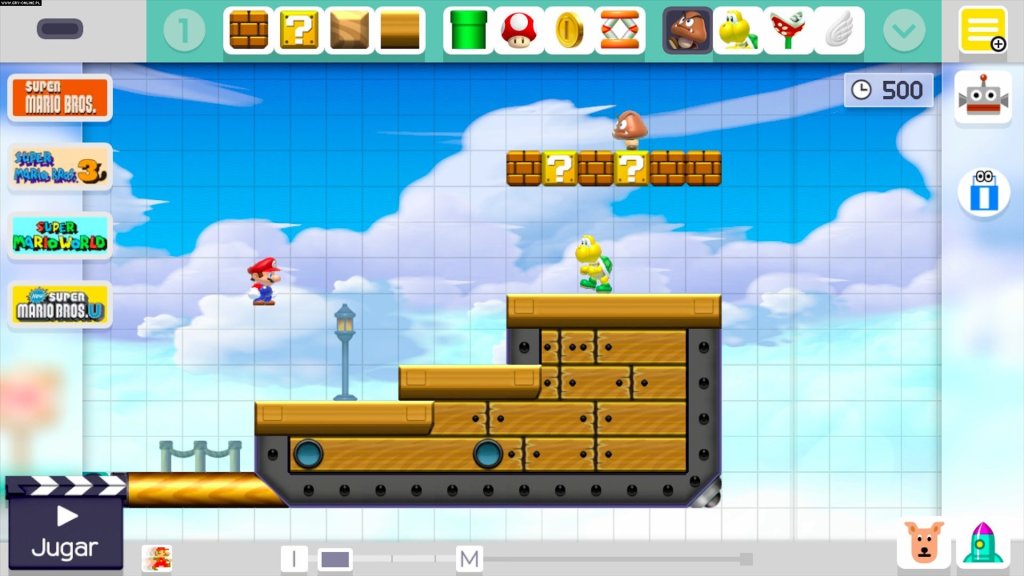
At first glance, it may be confusing to some why I would put the first Super Mario Maker game on this list instead of the second. The second is just the same game but with more content, right? Technically, yes. So why is that not the game listed? Well, a few reasons, most obvious of which is the hardware itself. The clunky Wii U and its massive tablet may have been the laughing stock of the industry for most of its lifespan, but if there’s one thing that’s undeniable about the Gamepad, it’s that it was designed perfectly for something like Super Mario Maker. From the pack-in stylus to the balanced weight that’s easy to set down and draw on, it’s a surprise that it took so long for something like Mario Maker to make an appearance at all. The Switch, unfortunately, doesn’t have such a design going for it, and Mario Maker is possibly the only game I would ever say feels worse to play on the Switch than the Wii U. The real kicker for me is impact, though. It’s easy to forget that back in 2015, the games’ media space was practically dominated by Super Mario Maker and all of the cool stuff made in it. By virtue of the Wii U having such a small install base, there was a palpable sense of community between creators and players alike, as users learned from each other, found their favorite levels, and reverse-engineered them to use in their own levels. The industry seemed to take a fairly substantial shift over those eight to ten months post launch, as minor updates and item additions received loads of attention and excitement every single time they made an appearance. It’s a sense of community and mutual appreciation for a work I’d never before seen come from a Nintendo game and, until I get into Animal Crossing, I don’t know if I ever will again.
13. Persona 5
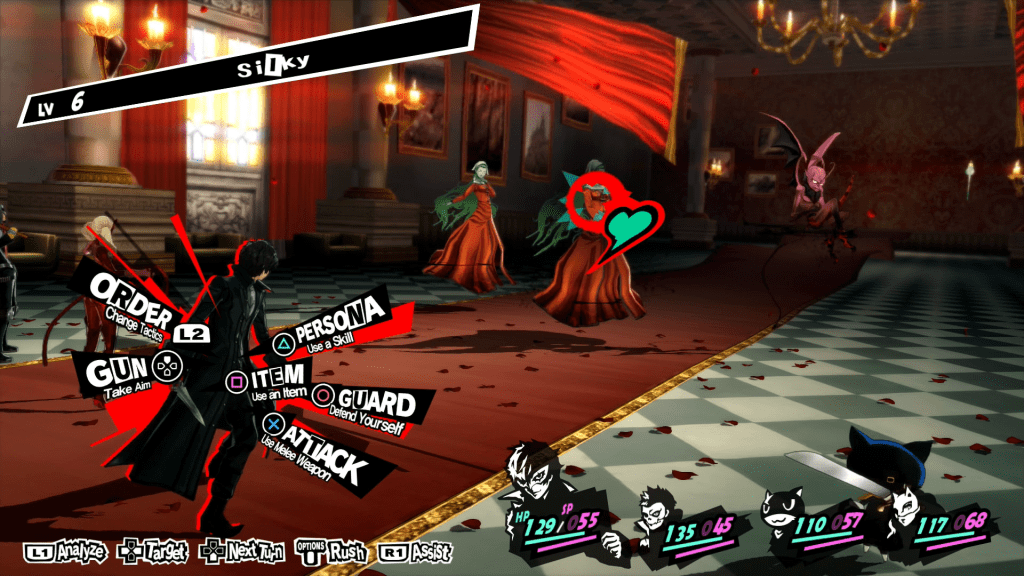
I don’t have time for long JRPGs. It’s unlikely that I will ever finish Persona 5, or any Persona game for that matter. Despite that, it would be disingenuous of me not to put this game here if only on the merits of what I’ve played so far. Persona 5 is the absolute definition of stylish, down to its very essence. From the distinct character designs to the dialogue, and from the visual style even down to the menus themselves, everything about Persona 5 feels entirely and unmistakably singular. The game is divided between a character drama/social sim during the day and a classic dungeon-crawling JRPG at night, but the aforementioned Persona style is seeped into every element of both sections to the point where you couldn’t have one without the other. School days are a time balancing act akin to that of a dating sim, choosing when to socialize and with who, and preparing for the night ahead. Dungeons, on the other hand, are a psychological exploration of characters in the “real world,” allowing you to take advantage of your knowledge of those characters, gained through the aforementioned socialization as well as some personal detective work. Combat plays like a mix of Final Fantasy, Undertale, and Pokémon, but with ten times the flair the three combined. Your crew fights randomly-encountered enemies in a standard party-based combat system, where each member takes turns beating on the enemies until they die or submit. Upon submission the party can then choose to either kill the monster for loot or converse with it in hopes of adding it to your team. Alternatively, in stylish Persona fashion, you can choose to simply shoot the enemy until it’s dead. All of this is incredibly engaging and works wonders in keeping the game interesting for literally dozens of hours. The final piece of the puzzle, one which I could speak about for ages, is the epic and flawless soundtrack spanning 110 tracks and a multitude of genres. It’s easily one of the greatest soundtracks ever made, with catchy hooks, driving instrumentals, and varied sounds throughout, and if nothing else it should keep me playing until I eventually beat Persona 5, hopefully by the time I’m in my 30s.
12. Super Mario Odyssey
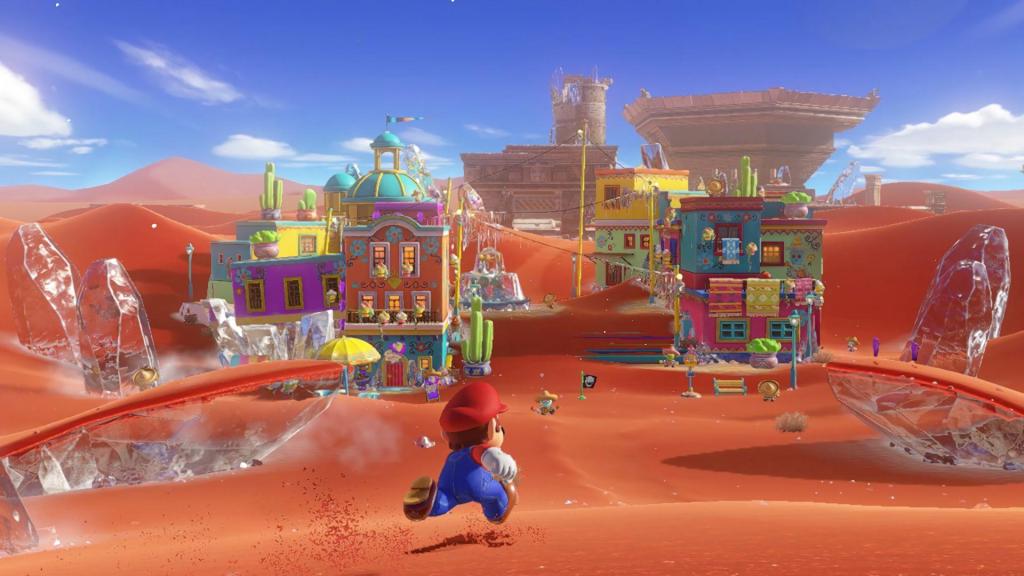
For nearly a decade, Super Mario Sunshine was my favorite game ever made. It’s the game I played the most growing up and, while it has its detractors, I still think it holds up marvelously as one of Mario’s most innovative adventures. I’m happy to say that, with the release of Super Mario Odyssey in 2017, Sunshine has been usurped for my pick of best 3D Mario game. While it does evoke the games of old in its pixel-perfect platforming and mario’s classic range of movement, it maintains its freshness with a myriad of smaller tweaks, alongside a host of larger additions. Most notable of these is Cappy, a sentient version of Mario’s cap that allows him to take the form of any creature he throws it at. This opens an enormous amount of opportunities for creative platforming and level design, with stacks of Goombas and Cheep Cheeps with dorky hats and moustaches making way for substantial movement, platforming, and light puzzle options. All of these movement options would mean nothing, however, without spaces to use them in. Super Mario Odyssey blends the pure design genius of Super Mario 64’s levels with Sunshine’s sense of a lived-in setting to make a set of over a dozen pseudo-open world platforming spaces to toy with and explore. Spread across these levels are hundreds, possibly thousands of collectibles, offering a frankly absurd amount of content to keep you playing long after the credits roll. Chief among these are the Moons, which functionally replace the stars of games prior as the primary objective. Unlike stars, which were generally limited to about 120, there are 999 total moons sprinkled across the world and, while that does make individual feel less special, it provides a core exploration loop that is far more addicting and engaging than the level-based system kicking you out after every star earned. Aside from the obvious mechanical strides the game makes, Super Mario Odyssey clearly has a deep understanding of the soul of a 3D Mario game, and the result of that understanding paired with Nintendo’s highest-grade quality assurance is a game that is not only incredibly polished and beautiful, but also evocative of nostalgia and sheer joy in ways few games ever manage.
11. Dark Souls
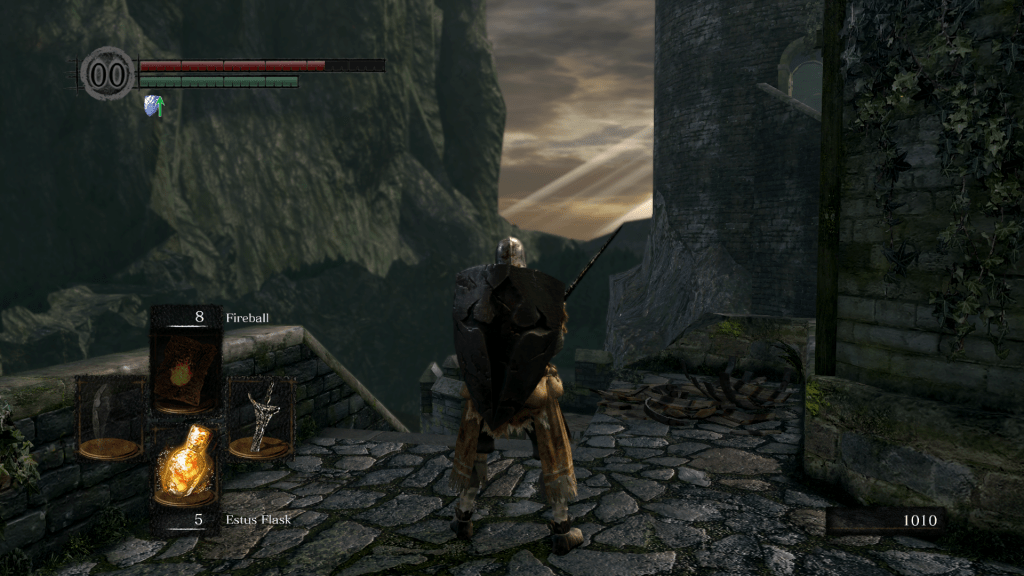
In terms of influence, you’d be hard pressed to come up with a game in the past ten years that made more of an impact than the first Dark Souls game. Starting off as a cult-classic followup to Demon’s Souls for the PS3, Dark Souls slowly amassed a small but rabid fanbase that quickly grew into a universal phenomenon, to the point that the series is practically unanimous in any gaming space as “the hard game.” That may be a fair assessment, but it doesn’t quite speak to why Dark Souls is special, and why most of its many, many imitators have failed to capture the magic of Dark Souls’ formula, and it doesn’t come close to explaining why the game has had such a profound effect on the industry since. Dark Souls is absolutely hard, gruelling at times, and has sometimes been credited with the so-called “return of NES difficulty” but, unlike that title may suggest, Dark Souls is dedicated to remaining constantly predictable in its rules and mechanics, and is consistently fair. The deciding factor in any situation is your planning, preparation, and skill of play. Gameplay is split between exploration and boss fights, with some of the most iconic level design in all of gaming, and what I can only describe as the only true 3D Metroidvania (besides Metroid Prime.) Twisting spires and seemingly endless crypts weave together seamlessly like a dark fantasy spiderweb, with shortcuts twisting your perception of the world around you as you go from the deepest caverns to the greatest castles within minutes. It does wonders for the experience, as it truly gives the world a sense of tangibility and realism, as if it was built from the ground up over the span of thousands of years. The world is scattered with enemies whose whole purpose seems to be awaiting your arrival, and every time you either die or rest at a bonfire, they return to their original position endlessly, like a more metal version of groundhog’s day. Where combat fully culminates is in the boss fights, the game’s most iconic and memorable element. From Asylum Demon to Artorias, Gaping Dragon to Sif, every single boss is unforgettable and, while they will punish you greatly for your mistakes, they’re always your mistakes. Oftentimes I will be on my twentieth or more try and still not be frustrated because despite the difficulty, there’s always hope and a chance to learn from my mistakes. If there’s one thing about Dark Souls I wish more games would learn from and emulate, it’s that feeling of hope and triumph. The Trilogy may be over, but it’ll be a long time before Dark Souls stops permeating the space of games, and the mark it left on the industry as a whole may never go away.
10. The Witcher III: Wild Hunt
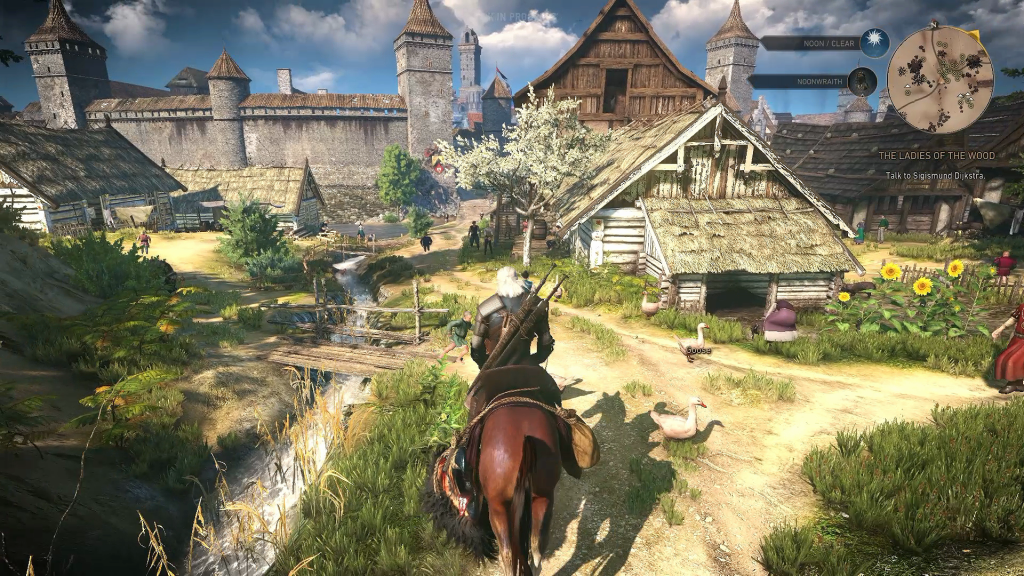
As one of the most well-regarded and loved games of the past generation, if not all time, it would be unavoidable for me to put The Witcher III: Wild Hunt on this list. Part of me almost feels like a contrarian putting it this “low” on the list, but for any smaller gripes I may have with the game it absolutely makes up for it in both its breadth of content and the sheer quality and polish put into every objective, every side activity, and every character. If there’s one thing that CD Projekt Red are undeniably fantastic at, it’s taking a world and breathing life into it with a web of interwoven details that build a natural and self-contained universe that feels less like a crafted setting and more like a place that you’ve been invited to visit. While The Witcher III’s main storyline did eventually grip me, what initially kept me wholly engaged was the beauty of the landscapes and the allure of the side content. It would be very easy to never even engage with the main plot, and spend all your time trying to do everything possible in the first area before moving on (if you’re reading this, you know who you are.) When the main plot does pick up, though, it really picks up. Despite peaking in the first dozen hours, the lulls it does have are never enough to leave me disengaged, and are made far less noticeable by the fantastic writing and characters the story is told through. Each one’s personality is rendered in extreme detail, and their motivations quickly became my own as I couldn’t help but want to know how each one’s story would end. Top amongst these are obviously the two main love interests, Triss and Yennefer, but to at least some extent every character received a similar level of care from both myself and the developers, it would seem. Combat is nothing overly special, generally your standard hack & slash fare, but it holds interest with some fun and interesting magic abilities, called signs, allowing you to slow time, push air, or just set enemies on fire outright. The enemy variety is what really keeps combat engaging, though. Ghouls and Drowners dot the landscape, but if you know where to look you’ll stumble across griffins, golems, ghosts, and all forms of abominations, each one requiring a different tactic to take down. While I can’t say the combat has any one thing particularly good or unique about it, as an overall package it services the experience well enough to not deter the player from engaging with the world on its terms. If I had to choose a strength to attribute The Witcher III with, it would be that it is fantastic at laying out its world and the rules of its world for the player, and then letting them loose to act out their fantasies in that world however they see fit. I may be slightly harsher on it than most, but I truly do feel that the game is far greater than the sum of its parts.
9. The Last of Us

Games are very good at giving the player control over the story and what events take place. That’s the whole point, isn’t it? Why would you play a game that actively refuses to let you have an impact on its story? That’s a question I’ve struggled with for a while, in my attempt to justify my enormous love for Naughty Dog’s The Last of Us (and its recent sequel.) The plot of the game is simple, basic even. Joel, the protagonist, is tasked with bringing Ellie, a young girl who’s recently found herself to be immune, across the United States in an attempt to find a cure for the zombie virus. Put in such simple terms it might even come off as boring, and absolutely nothing that hasn’t been done before. Where The Last of Us truly shines is in the way it tells this story, and the way it builds the characters – particularly Joel and Ellie – and their relationships. There’s something intimate and personal in the way that the two protagonists build an inseparable bond that, while predictable, is rendered with such care and loving detail that it would be hard not to fall in love, and by the time it was over I was tempted to start again just to spend more time with them. Gameplay is fairly standard for a modern Naughty Dog game, with stealth, cover shooting, and set walk patterns for enemies. Where The Last of Us stands out in relation to the Uncharted games, and the reason that until the release of its sequel I considered it to be the best-playing game they’d done in this modern era, is in the way it handles resources. Instead of the inaccuracy of a thumbstick being an annoyance like in most games of this ilk, the low levels of ammo and other vital resources available to you at any given time makes each shot feel more like an investment, and the stress of having to aim perfectly with the thumbstick adds greatly to both the tension of combat and the satisfactory relief of landing that final blow on an enemy. Every encounter sells the desperation and near hopelessness of their potentially futile attempt to cross the country. Despite the odds, The Last of Us manages to shine brightest for me in its more innocuous moments. The fleeting moments where Ellie’s childish sense of wonder peeks through, and the heartbreakingly human arguments she and Joel get into, they’re what make the big moments so powerful, and what makes The Last of Us a game that has me completely sold on the concept of playing through a story rather than creating my own, sometimes.
8. NieR:Automata
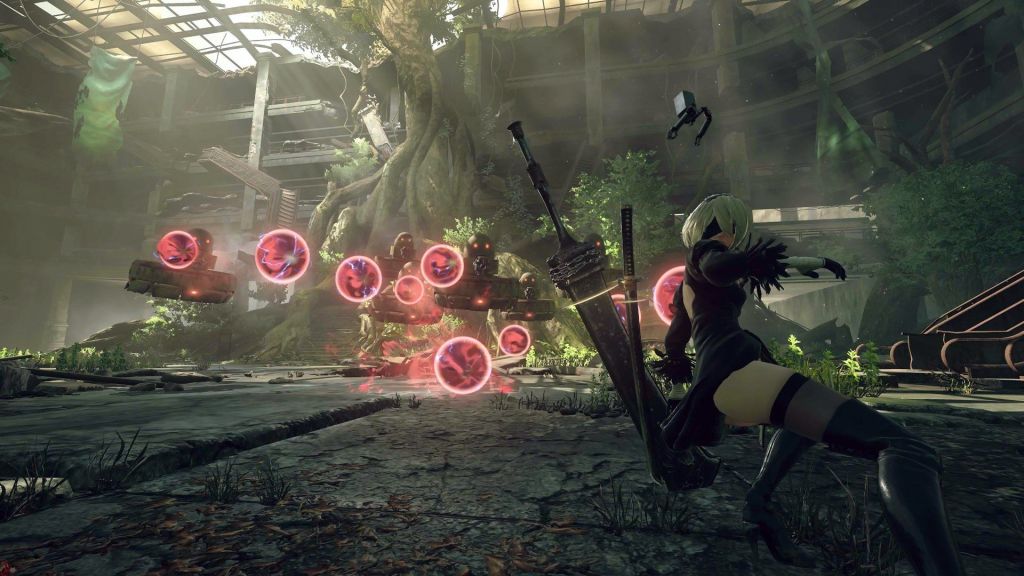
Practically polar opposites to the last game on the list which, it could be argued, could have been a movie, NieR:Automata wholly embraces the video game medium in every aspect of its being. If you know anything about director Yoko Taro or his previous work, this should come as no surprise. He’s long maintained a cult following and status alongside the likes of Hideo Kojima as one of the great innovators of the medium and how it is used to tell stories, a label that’s easy to understand after even a cursory glance at his back catalog. NieR:Automata (a title that is as annoying to read as it is to type so please bear with me) is possibly the most accessible of Yoko Taro’s works, which can be interpreted as either a good or a bad thing depending on the audience, but in my opinion has never stood in the way of the game telling it’s epic, intimate, convoluted, yet powerful story. Finding where to start when describing a game is always a difficult task for me, but in this case it’s more than just a difficult task, it’s near impossible because frankly I don’t know what qualifies and does not qualify as a spoiler. I suppose you can take that as a minor spoiler warning if you’d like, though I will do my best to avoid discussion of plot as much as possible.
There were times while playing NieR:Automata that I thought I hated the game. It can be clunky, and sometime it feels like a PS2 game, and most of all it is deadest on some of its rules, particularly its strange and sometimes-brutal save system. Hours of progress would sometimes go up in smoke because I forgot to save In those moments, I strongly considered quitting the game outright, but something always pulled me back. It’s the characters, I think. For all their flaws, 2B and 9S remain some of the more memorable characters to come out of the decade, both visually and in their personalities. Watching as the two androids learn about the world that humanity left behind in their extinction and the way it’s crumbled in the thousands of years since that fall is truly a fascinating and eye-opening look into what our civilization and societies would look like from the outside. The concept of “androids become sentient and show off the worst parts of humanity” may be done to death, and some of the dialogue may suffer from that, but the way that his narrative interacts with the way you play the game and its mechanics is truly fascinating, and through its multiple routes I never found myself rolling my eyes at the game like I thought I would, instead I was thoroughly engaged throughout. If there was one game I could play again wholly blind, I think it would be this one.
7. Resident Evil 2
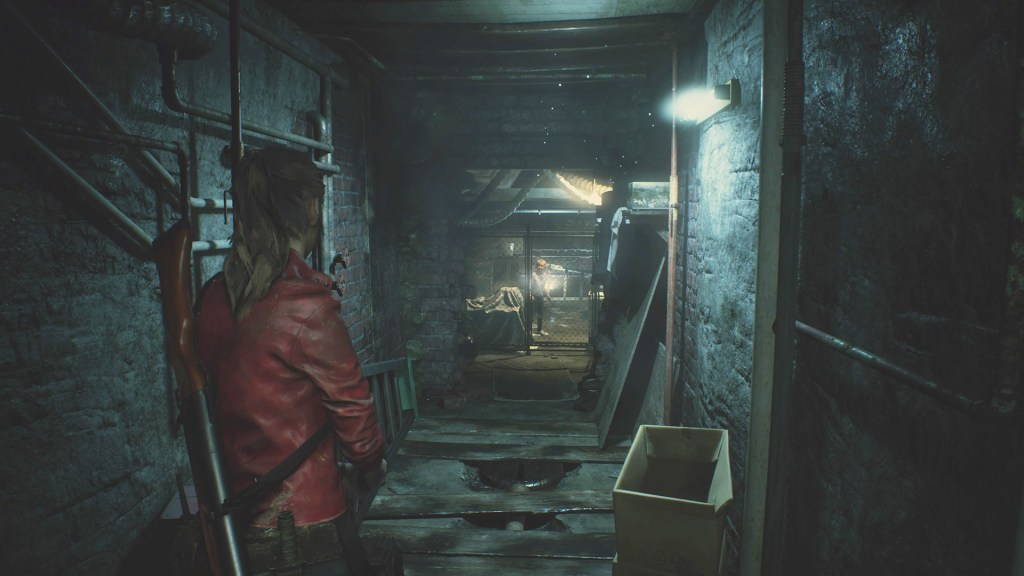
If there’s one trend I would most associate with the past ten years of gaming, it would be the remake/remaster. Some of them have been substantial, like the Crash Bandicoot and Spyro Remakes, some have been actively terrible, like the Silent Hill HD Collection, and most of them have been fairly pointless. Towards the end of this generation though, we’ve started to see an influx of fantastic remakes and reimaginings of PS1 games in particular. Chief amongst these is last year’s remake of the classic second installment in the Resident Evil franchise. Where most remakes tend to offer little more than the same game but with higher resolution, better animations and models, higher resolution textures, and maybe some quality of life improvements, Resident Evil 2 opts instead to perfectly recreate the spirit of the original in a brand new game, one that combines the best parts of modern action and horror game design with the feeling of tense exploration that made the original so special. Enemies are easier to hit thanks to the new third person camera angle, but the unpredictable way that zombies animate more than makes up for that, alongside the seemingly random amounts of health each one has. Basic enemies will take three, five, even up to nine bullets to the head before going down, and even then it’s likely that they’ll be back again after a while unless you’ve completely destroyed the head. Alongside the harsh ammo scarcity this makes every encounter a decision point – do you engage, or evade and risk having to engage later? While it’s not entirely required, I find it hard to imagine playing through Resident Evil 2 without at least attempting to search every nook and cranny, finding every single bullet and weapon modification the game has to offer. Luckily for me, exploration is made as fun as I can imagine it being here with possibly the most intuitive map system I’ve seen outside of a metroidvania. Rooms black if undiscovered, red if previously accessed, and blue if completely cleared. Items are marked on the map if they’ve been left behind, which ties nicely into the series’ staple of inventory management, which has received minor tweaks but overall has the same effect of maintaining the frugal mindset of “how much do I really need these healing items?” a decision that will often mean life or death in the grand scheme of things. All of this goes without mentioning a certain mechanic that shows itself in the second half of the game, one which has been widely publicized but I still feel inclined not to spoil just in case. All that I’ll say is that it’s the best usage of a time constraint that I’ve seen in a game, and massively increased the tension moment-to-moment to both fantastic and near-unbearable levels. Overall Resident Evil 2 maintains its status as the most technically efficient and faithful remake I’ve played to date, and it may always maintain its spot at the top of my list of favorite Resident Evil games. Capcom has been on a roll in recent years, and I hope that the massive success of this game will fuel their decisions in the next installment.
6. Yakuza 0
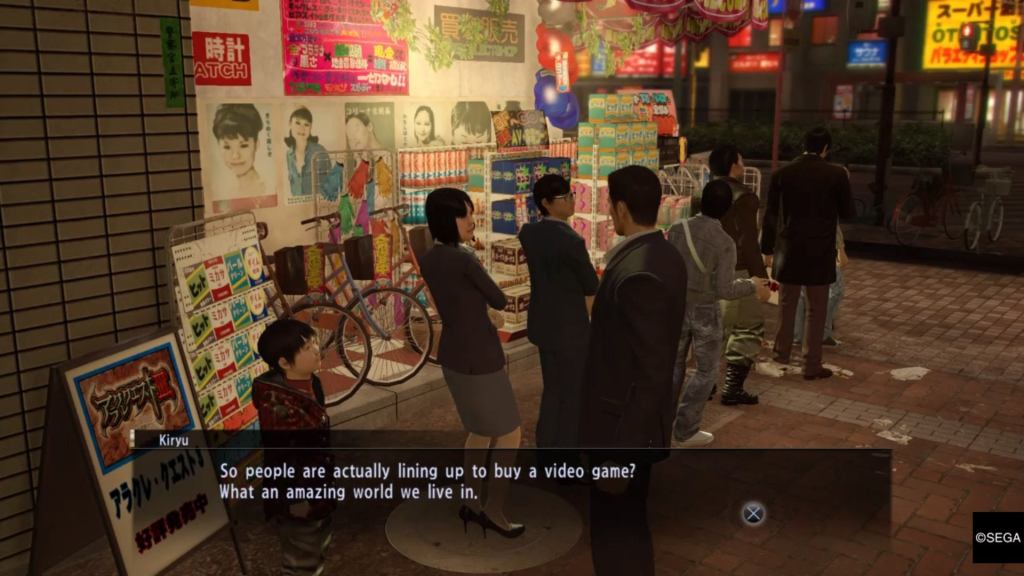
The Yakuza franchise is one that I’d always admired from afar as the great spiritual successor to the Shenmue games for the Dreamcast. Unfortunately, the series had its start with two PS2 games that, frankly, do not hold up today. Luckily for me, this decade gave me a fantastic entry point to the series in the prequel, Yakuza 0. Let me get something out of the way first: This game is absolutely all over the place. In the span of an hour you’ll go from a hard-boiled gritty revenge plot filled with talk of honor and betrayal, to a heartwarming tale of two brothers giving everything to keep the other safe, to the batshit insane combat playing like a mix of Devil May Cry and Dead Rising, and round it all off with an absurdly fleshed-out karaoke minigame. Yakuza 0 is an “everything and the kitchen sink” kind of game, taking every single facet of ‘80s Japan you could imagine and rendering it in shockingly vibrant detail. With well over a hundred side stories to follow throughout the game, some of which approach the length of the actual game’s plot, it would be difficult to run out of things to do in respective red light districts of Osaka and Tokyo. The plot centers on two young gangsters: Kazuma Kiryu and Goro Majima. Kiryu is a hot-headed ex-yakuza who is deadest on defending the honor of himself and his mentor, by any means necessary. Majima, on the other hand, is a cool-tempered cabaret owner with a dark past and a fantastic arc. They don’t tend to cross paths, instead switching your perspective every few chapters to see what the other one is up to. While the missions in each one’s chapters are far from innovative in their gameplay, the level of attachment and care the game manages to draw from me with such a fun but trite set of cliches is frankly incredible, and by the end I was ready to proclaim Yakuza 0 as one of my favorite stories in games, period. I don’t know if any of it would work without the fluff on the edges, though. From the aforementioned karaoke, to the baseball, to my personal favorite, the pocket car racing, all of it is so goofy and makes for some humorous moments when you realize these are two grown men investing their hours into these hobbies, but that doesn’t change the incredible amount of content that’s hidden behind these side activities. More core to the gameplay is the combat and, despite my initial reservations with its flow, it quickly grew on me as one of my favorite combat systems to appear in a game. Each of the two characters has four separate stances, which can be switched through at any time using the D-Pad. It’s difficult to overstate how great it feels to master all of these styles of combat, and to freely switch between them mid-combat to string together some ridiculous combos. Like everything else in the game, it’s given an extra layer of depth with an absolutely massive upgrade tree for every single stance, one that blew my mind the first time I opened it. It’s hard to know where to stop when writing about Yakuza 0, it feels like there’s so much more to say and so much I’m leaving out, but I hope this has been an adequate representation of why this game is so special, and what makes it one of my favorite video games, period.
 Writing About Music and Games Sometimes