
5. DOOM
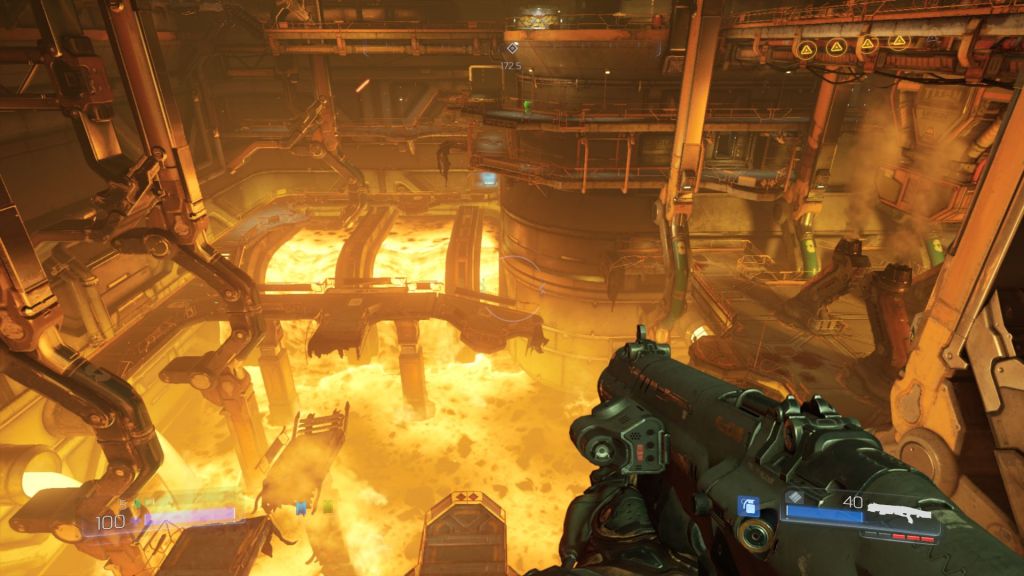
You guys know my thoughts on the modern Doom games already, don’t you? I mean I wrote an entire review for the second game earlier this year. It feels strange to talk about the 2016 Doom reboot in light of what I said about Eternal, but I think it’s important to reiterate that while I think that game is better than this one, that doesn’t change the fact that prior to this year this was my long standing pick for best FPS game ever made. In a similar way to how Resident Evil 2 succeeds as a remake by remaining utterly faithful to the spirit and tone of the original, Doom succeeds as a reboot by doing the same thing but with wholly new levels, gameplay, and story. Almost everything I praise about Doom Eternal gets its start here, from the resource management loop to the lack of a reload button, everything is intentionally designed to keep you in perpetual motion forwards and headfirst into enemies at mach speed. The goofy but straight-faced way the game plays its lore is done at least as good if not better here, and some of those demons’ codex entries are burned into my brain just because of how funny I found them. Level design is more compact and restrictive, with less mobility options at your disposal, but that gives demons more chances to hit you and thus more of a skill curve for avoiding them. In preparation for this list I replayed this game and found that, contrary to what I’ve seen discussed online, this game is far more difficult than its sequel, at least in my experience. Of course, the soundtrack is legendary, and probably more memorable than the sequel’s, but that’s likely in part due to it being the first of its kind in the industry. There’s not much else I feel like I can say without reiterating what I said in the Doom Eternal review, but overall Doom 2016 remains one of the best shooters I’ve ever played, and still absolutely worth playing to this day.
4. Super Smash Bros. Ultimate
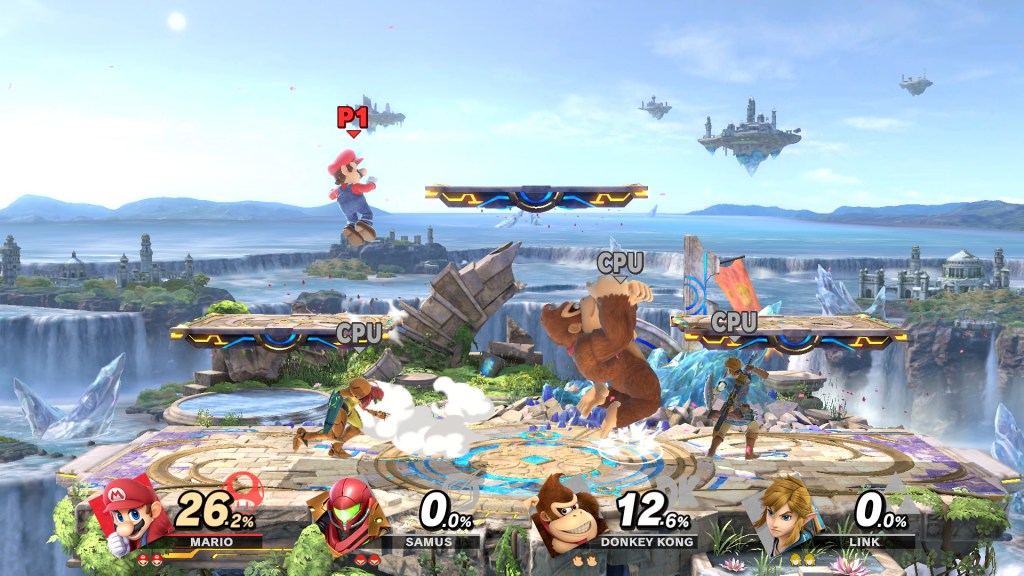
You know, the Super Smash Bros. series has always been the Nintendo fan’s fighting game, being essentially the publisher’s Avengers equivalent and tying all their properties together for one all-out brawl. Lately though, and especially with Super Smash Bros. Ultimate, it’s begun to feel less like a tribute to Nintendo’s history and more like a tribute to the history of video games as a whole. Gone are the days of the dozen characters present in the original, a number that seems almost pathetic now. Instead Ultimate has over seventy characters to pick from, every single character ever in the series plus newcomers, and that number is only increasing. From Mario to Final Fantasy, Zelda to Metal Gear, and Pokemon to Persona, the range of franchises represented is almost absurd, and that’s only mentioning the playable fighters. Taking into account Assist Trophies, Stages, and the thousands of unique Spirits, the representation is frankly unparalleled. When I play with friends, though, that seemingly overwhelming level of contentment and amount of choices suddenly fades away and I’m left with what may be my favorite multiplayer game ever. It can’t be overstated the genius of Super Smash Bros. Ultimate’s design, particularly in its versatility as both a party game and a competitive game. The Smash Bros. competitive scene has always been something I’ve admired but have come to accept I will never reach the level of skill required for. Playing with friends, on the other hand, is some of the most fun I’ve ever had playing video games, period. With different options for any player’s skill level or preference, it’s hard to combat the notion that this is by far the most accessible fighting game that could be at all considered “competitive” of “tournament worthy.” Even in matches with large skill gaps, the amount of variety between the movesets means that even the newest player can get a lucky shot in on a pro and land themselves a stock or even a win. The real memorable moments tend to come once you start playing with people of an equal or similar level to you, though. I’m lucky enough to have many friends who are about as good at the game as me, and it’s resulted in some of the tensest, most competitive matches of any game I’ve ever played. Controllers get thrown, expletives get blurted out in panic and rage, and by the end of it everyone sits back and laughs it off before doing the whole thing over again. It’s these moments that put Super Smash Bros. Ultimate on my list, not just from the sheer technical quality of the game itself, but for the moments it’s given me and my friends, ones I doubt I will ever forget.
3. Rocksmith 2014
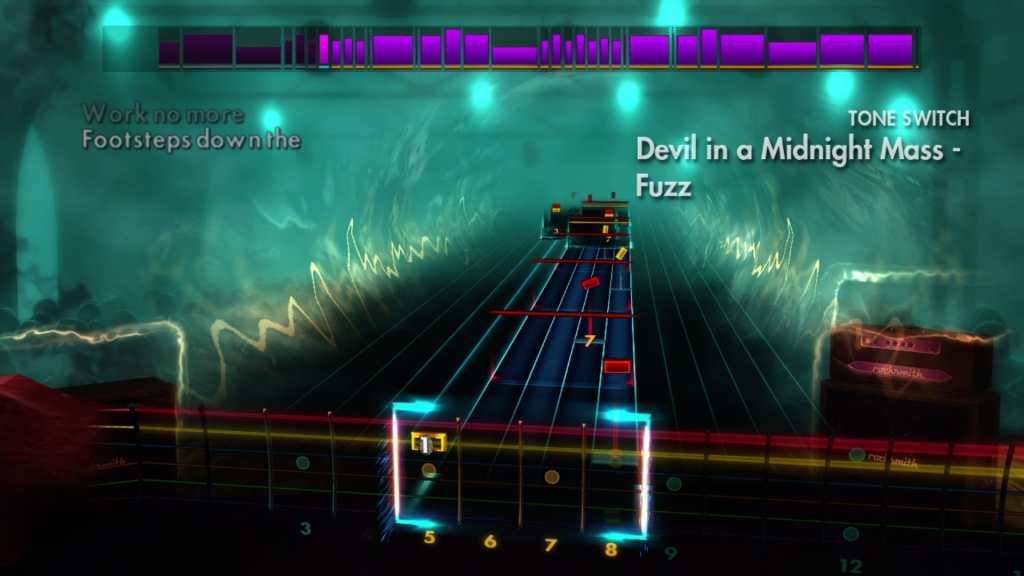
There’s a video by Youtube creator and friend of mine Jacob Geller about why he loves the game Beat Saber so much. It’s an awesome video and one that I think everyone should watch on its own merits, but I bring it up here because it perfectly represents my feelings for Rocksmith 2014 as an experience, and as a tool. For anyone not familiar, Rocksmith is essentially “Guitar Hero but with a real guitar.” It’s barely a video game, and I considered leaving it off the list entirely for that reason, but Rocksmith has had far more of an impact on my life than any other game on or off this list ever has.
Watching someone else play Rocksmith 2014 can be either overwhelming or simple, depending on your experience with rhythm games, but the game tutorializes playing guitar in a way that makes it very easy to get started. Sometimes to its detriment, Rocksmith uses a songs-first approach to teaching guitar, using its dynamic difficulty system to onboard players into any song they want to play at any level, as the songs will gradually get closer and closer to how they’re played on record. This, alongside the riff repeater function, was vital to my initial steps towards becoming a guitarist. Using the RealTone cable packed in with the game, it automatically detects the tonality of your playing and semi-accurately determines whether or not you’re playing the right notes or not. It’s not perfect, or even great, but it’s good enough to be properly used as a tool with little to no interference from the game aspects. Techniques are taught through in-app video lessons that, frankly, I never used. Generally, a quick Google search was more informative as to how the techniques worked and different ways to use them, but the tools are there and I don’t doubt they would be helpful for someone slightly more patient than I. The Guitarcade minigames, on the other hand, are utterly useless and outright bad. Luckily, they’re wholly optional and provide no detriment to the core of Rocksmith.
The real meat of Rocksmith 2014 is in its song selection. As of this writing there are over 1,500 songs available in the game, with no plans for future releases. I own every single one and, while it is a ridiculously large catalogue, I don’t know if I’d have my nearly two thousand hours of playtime if only for those songs. Luckily enough, Rocksmith has one of my favorite game-centered communities I’ve ever been a part of, and a modding community that rivals those of Skyrim and Minecraft. My Rocksmith install is currently about 140GB large, with about 13,000 songs downloaded, and that hardly even scratches the surface. While you may not be able to find every song you could possibly want, you’d be hard-pressed to find a group that isn’t at least represented in the list of customs available. Add to that an online community that is constantly taking requests for customs to make, and you’re left with a practically infinite stream of quality content for a game already so dense with it.
Rocksmith is the most important game I’ve ever played. Rocksmith is my Beat Saber. Without it I wouldn’t be playing guitar, I wouldn’t be interested in music the way I am now, I would probably not have an interest in writing the way I do now either. I chose not to rank it at #1 because I don’t believe it to be a “proper” video game, but in my heart Rocksmith will always be my first pick.
2. Red Dead Redemption 2
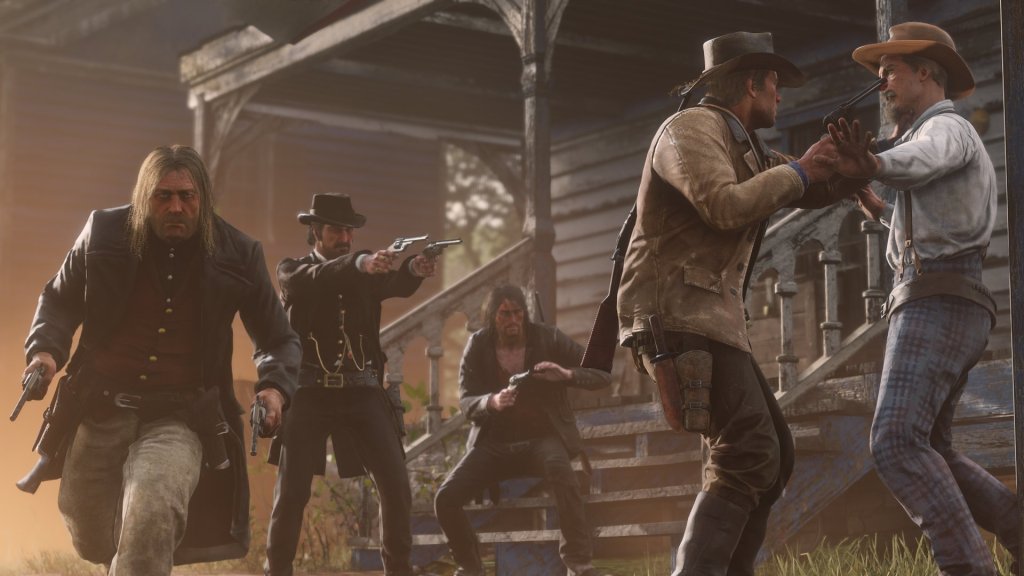
I don’t know if I’ve ever been so excited for a game release as I was for Red Dead Redemption 2 back in 2018. I honestly couldn’t even tell you why, I had never played the first game, I didn’t consider myself to be particularly interested in westerns yet, and I didn’t and still don’t like Grand Theft Auto V. Despite that, something about the way characters would interact with each other in trailers and the beautiful landscapes the trailers would use to cut between action shots grabbed my attention and led me to my first day-one purchase of a video game. Luckily, I was far from disappointed.
Red Dead Redemption 2 is special in a way that I’m not sure I’ve seen other games at this level attempt to be. Instead of being a content dispensary churning out action setpieces and story moments left and right, the game asks – demands, even – that you take a minute to just live. You play as Arthur Morgan, an outlaw running with the infamous (if you played the first game) Van Der Linde gang as they try to keep themselves afloat after a job gone horribly wrong. Naturally, the first step to getting back on your feet as a group is laying low and slowly accumulating, taking small jobs and little robberies to build enough money to get away from the law. This gives the player a lot of time to learn to love the protagonist of Arthur and his gang of misfits. There is not a single character I wouldn’t be able to name from that group even after one playthrough, because every single one is just so distinct and memorable. It also gives you time to build an understanding of how the game is paced and what it expects from you as a player. Playing Red Dead Redemption 2 to its fullest means fully handing yourself over to the world, the characters, and the rules the game has set out for you. It’s a cowboy roleplay, baby, and if that’s not what you’re looking for then go play Red Dead Revolver I guess.
In seriousness, once the game opens up and you get a chance to explore the absolutely massive and gorgeous open world, it reveals itself as not only the most beautiful game I’ve ever played, but as the most fully-realized world ever put into an open world game. From the grimy, disgusting swamps to the luscious open fields, from the sun-soaked deserts to the bustling civilization of St. Denis and Blackwater, everything is filled with detail, but is also given space to breathe – never feeling overcrowded unless intentionally to suit the mood of the area. There’s no feeling quite like hopping on your horse and just riding, looking for whatever you happen to stumble across, be it a robbery in progress, a paleontologist digging up a dinosaur skeleton, or a family building themselves a house. It’s these moments, these tiny details in this massive landscape that truly make me feel like I’m in a world that exists, or at least once existed.
On the other hand there’s the story, which I’ve found to be a contentious subject in my own discussions with others but is frankly my favorite story in any game, period. From the very beginning it hooked me with the setup of a group of outlaws struggling to survive, and gradually it built me up to the point of caring for each character’s motivations and goals in life, whether I actually thought they could achieve them or not – or whether I even wanted them to. There’s massive cinematic shootouts with body counts in the dozens, and stakes higher than the moon, but in equal measure there are tender and heartbreaking moments of quiet where we see the dynamics of the gang shift over time. Be it hot dad John Marston trying and failing to reconcile with the life he has to lead now as a father, or Charles Smith, doing his best to come to terms with his relation to the native tribes he’s being made to screw over for the good of his gang. Every horse ride to every location is poignant and necessary to the story and overall value of the piece. In many ways, Red Dead Redemption 2 is the perfect western, and it is by far my favorite. It’s a game that’s impacted the way I view storytelling as a whole ever since I played it for the first time, and in the two years since then the spark has refused to fade.
1. Bloodborne
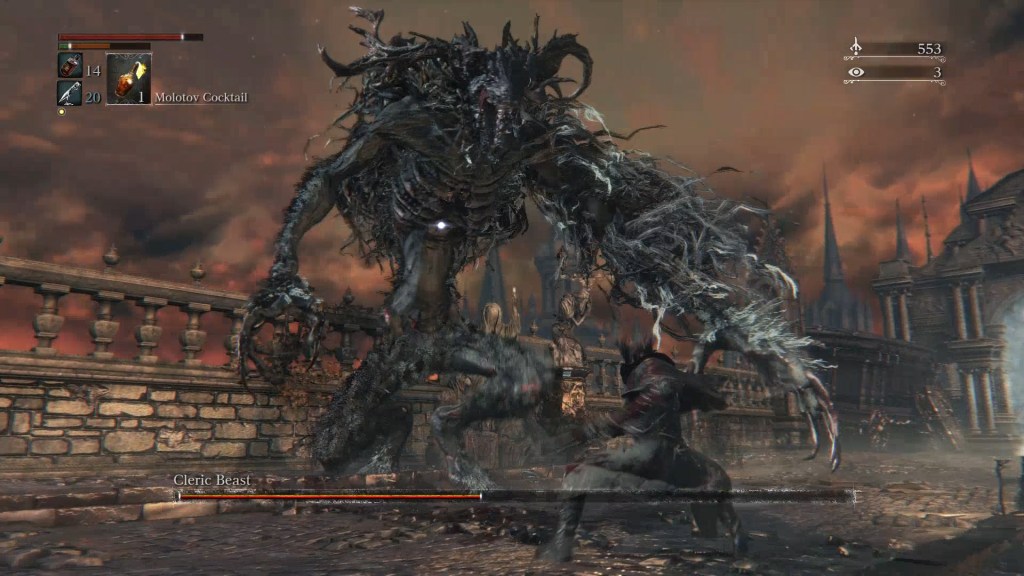
This is it: my favorite game of not just the past decade, but of all time (for now at least.) This right here, to put it simply, is peak video games. There’s not a single element of Bloodborne that I would change, not one moment I would sacrifice, because I sincerely believe that this is the greatest overall package ever delivered in the games’ medium. Combat, story, level design, visuals, progression, tone, all of it is masterfully tweaked to achieve the closest thing to perfection imaginable.
Bloodborne is essentially a Dark Souls game in most aspects, from the interconnected world and Bonfires to the levelling system, everything is at least reminiscent of the game that came before. Chief among these, and the thing you’ll be spending most of your time in Bloodborne engaging with, is the combat. At its roots, the game’s combat is extremely similar to Dark Souls. You have a light attack, a heavy attack, a parry, a dodge, limited healing items, and a recharging stamina bar. What Bloodborne does to set itself apart and high above the other games in the series is make some seemingly minor tweaks that massively alter the pace of combat and the ways in which you’re encouraged to interact with it. Where Dark Souls is slow, methodical, and reactive, Bloodborne is fast, aggressive, and proactive, encouraging you to take the reins of any combat encounter and never let them go. First and most obvious of these minor changes is the removal of the shields, an oft-mocked Dark Souls staple. Instead, The Hunter is given a gun with which to parry, encouraging the player to actively counter their target’s actions rather than block them. It should come as no surprise that successfully parrying an enemy with a gun is one of the most satisfying feeling in games, and Bloodborne gives you a huge arsenal with which to do so. The second major tweak is a slightly more innocuous one, but one that I think is equally, if not more important than removing shields: the ability to rally health. After getting hit, you have a short window in which you can regain your lost health by hitting the enemy as fast and hard as possible. This has massive implications on the flow of combat, as you are no longer inclined to back away after every hit, trying to find a window to heal, instead combat is a constant flurry of blows, trading in blood until one or the other falls.
Enemies in Bloodborne take two forms, the ones out in the world who respawn every time you die, and the boss fights. Enemies in the world tend to come in packs and, while never particularly difficult, will very easily rip you to shreds if given the opportunity to pile up on you. Your main interaction with these enemies will be during your time exploring, searching for shortcuts and items, killing enemies to clear a path and to obtain Blood Echoes, the game’s currency and exp equivalent. Most of the time, though, you’ll be passing them up entirely to get to the boss rooms, which contain the real meat of Bloodborne’s combat. Every single boss in the game is instantly recognizable and, while not all of them are equally difficult, all of them require a different playstyle with which to tackle them. Hunters like Father Gascoigne require an approach similar to that of PvP, an elegant dance between two near-equals where every blow is met with equal retaliation and parrying is mandatory. Beasts, like the Cleric and Blood-Starved beasts, require a polar opposite approach, forcing you to take advantage of their massive size to topple them in their moments of vulnerability, before piling on as much damage as physically possible before their recovery. Obviously, there are bosses that fall outside the archetypes mentioned, but I find that one of the greatest joys of any souls-like game is in discovering the bosses and how they function for the first time.
There’s a sense of dread that is core to Bloodborne’s very being, one that crawls deep into the mind and, whether consciously or not, renders it impossible to escape its claws as it pulls you deeper into its madness. From the second you step out of the darkness into the streets of Yharnam, it becomes obvious that you’re in it for the long run. Massive towers and twisting architecture clamor up towards the sky underneath a blood-red sky as beastly creatures roam the streets on the night of the hunt. As you trudge through the streets, searching through the nooks and crannies of the environment for anything that might help you, something begins to become abundantly clear: This isn’t what it seems. Bloodborne conveys its horror in a way that many before me have described as “Lovecraftian,” and I’d be inclined to agree on nearly every basis. Bloodborne holds the allure of the abyss in its lore, in its visuals, in the story, and most of all in the way it engages the player on a nearly primal level, driving them to the end no matter how hard the path is. Exploring the interconnected web of the game’s map is like uncovering the clues to a mystery, finding ways to circumvent the meatgrinder of enemies that is the main path, instead rewarding the keen-eyed player with faster and more reliable ways to get around. Every area is incredibly memorable, and at this point I could practically run through the entire game map with my eyes closed. Exploration is the only way you’ll find new weapons, items, and even the bosses themselves, and it’s my favorite instance of player-directed exploration in games, bar none.
In terms of presentation, it’d be a crime to ignore how absolutely gorgeous Bloodborne is from a visual standpoint alone. Every area is visually distinct, with the aforementioned towering spires reaching down into dilapidated sewers and dark forests. The interconnected nature of the world leaves elements tying everything together, but the differences between areas are palpable and leave you with no confusion as to where you are. The moonlight shines differently on Central Yharnam than it does the fallen town of Old Yharnam, if it reaches at all, and the wooded areas are fogged up entirely with shadowy figures lurking around every corner. Animation is a part of the game that is as mechanical as it is visual, with viscerally appealing hit animations being a show of spectacle as much as they are the game’s way of portraying mechanical ideas like hit and hurtboxes. Weapons are another massive aspect to the experience of Bloodborne, and beyond just being as mechanically distinct as they are, they all look and act in completely unique ways. For example, the Saw Cleaver makes a good case for itself as an entry point for souls players, essentially working like a broadsword, but hitting L1 causes it to unhinge and double in length, allowing for bigger sweeping attacks and crushing heavy blows. The Threaded Cane on the other hand, is significantly faster in its basic form, but its second form causes it to collapse into a whip, offering massive range and letting the player stay far away from enemies as necessary. Every weapon having two settings allows for more expressive gameplay and gives some opportunities for satisfying combos as you switch between modes mid-combat to suit your needs. One final aspect of presentation that I’d be remiss not to mention is the soundtrack which, unlike the midi soundscapes of the Dark Souls trilogy, is fully orchestrated with a live band, allowing for a more expressive and memorable feel. Tracks are provided with a far wider dynamic range, allowing the softer moments the contrast they deserve from the epic scale that the bellowing horns and chanting vocals deserve. It’s all composed masterfully and truly sells the haunting feeling that some bosses have, while doing justice the urgency of others. The lack of music outside boss fights also does wonders for making the few times you do hear music stick with you and remain memorable.
Overall, after everything I just wrote, I’m comfortable stating the fact that Bloodborne is my favorite game ever made. In every element, From Software has succeeded in crafting what I can only describe as a masterpiece from start to finish. It’s a game I can see myself playing and replaying for years, and one that has and will shape my taste for decades to come.
 Writing About Music and Games Sometimes