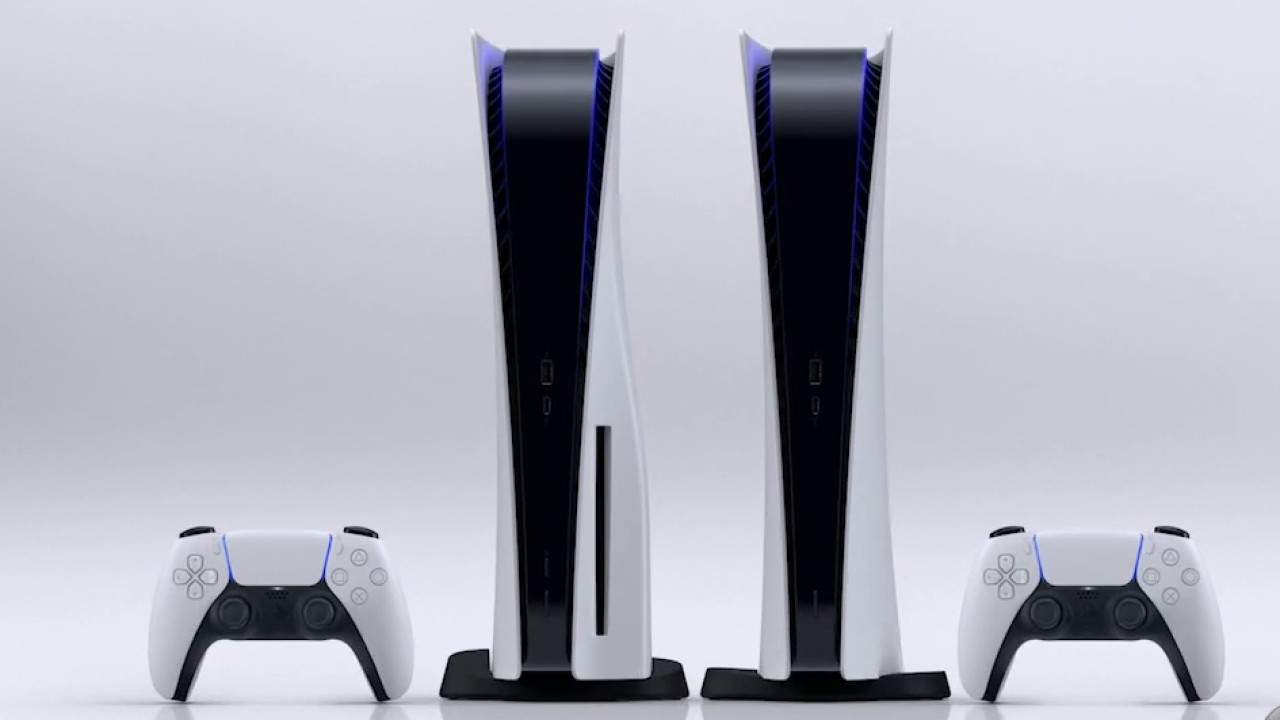
It’s been about seven years since the Playstation 4’s launch in 2013, a console that, despite in retrospect not being that massive of a leap from the previous generation, managed to host some of the best and most technically impressive games ever made. Now in 2020 Sony is back with another box, the Playstation 5 and, while not quite being their biggest game-changer system in terms of features, it comes damn close with additions that promise to push gaming forward in a big way. Despite some caveats, the overall experience of using a Playstation 5 is crisp, streamlined, and above all fast.
A Necessary Jump Forward
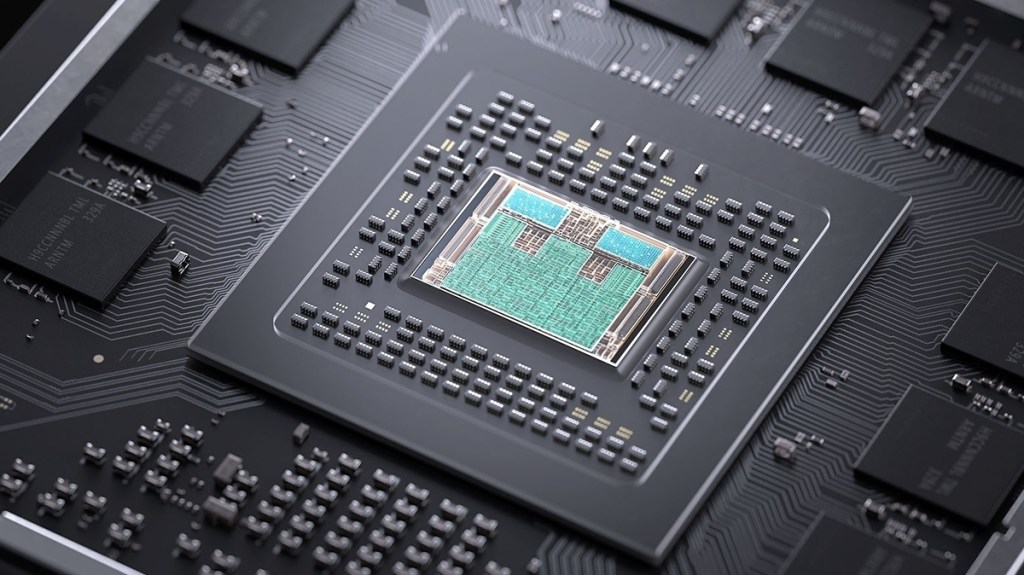
From a hardware perspective, the leap forward is obvious. This is thanks to a custom 825GB SSD, built from the ground up with the console’s specs in mind to maximise its potential and its usable power. Able to process and load upwards of 8 gigabytes per second, in contrast with the PS4’s 50-100 megabytes, load times are essentially a non-factor going forward, at least for exclusive titles. This applies not only to games, but to the firmware and UI itself. I tested a few games from cold boot (console turned all the way off) to in game running around and found that Spider-Man: Miles Morales and Demon’s Souls both averaged just under 50 seconds, while Astro’s Playroom came it at an incredible 35 seconds. Comparing this to games like Bloodborne and the previous Spider-Man game on PS4, it’s night and day.
Now, you may have noticed a pretty big caveat in the above paragraph. 825GB? That’s it? Unfortunately yes, the PS5’s internal storage is just shy of a single Terabyte, with no currently available storage upgrade options. What’s worse is that only 667.2GBs are usable, and a whopping 80 of those are taken up by a mysterious “Other” section which seems to be tied to backwards compatibility, as when I moved all my PS4 games off the console onto an external drive it practically disappeared. What this means is that some pretty massive concessions need to be made by any user with a large or growing collection of games for the platform. As file sizes increase, this will only get worse and worse, with games like Call of Duty Black Ops: Cold War already taking up over 200 gigabytes of space, functionally a third of the total storage. PS5 games are also not capable of being played off an external drive, though backwards compatible games are. Strangely though, you can’t even store them there temporarily to download another game to play, you must uninstall it completely to make room which means hard decisions may be a regular occurrence for some users. While Sony has promised to make upgrade options available eventually, the low storage capacity at launch has real consequences on the overall user experience.
Aside from the storage speed and capacity, there’s not much to gawk at when it comes to the PS5’s Hardware. It’s boasting a Custom RDNA 2 graphics processor capable of not only up to 8k output, but raytracing at adaptive 4k resolution in certain games. It’s a technical leap miles ahead of that between the PS3 and PS4, and makes a massive difference when it comes to futureproofing the system. 16 Gigabytes of GDDR6 RAM gives developers far more leeway with their development, and combined with the aforementioned SSD makes far more dense and detailed environments possible in games going forward. All of this with the added perk of being completely silent when in use, unlike the jet engine that was the PS4. It’s able to do this because of its massive size, which means a sacrifice in convenience, but I find it to be totally worth it. Ultimately it will come down to how developers utilize and become acquainted with the hardware to determine whether or not the jump is enough to sustain a whole generation, but given some of the incredible experiences the PS4 managed to squeeze out of its hardware this past year alone, I have high hopes.
Approaching the Dream

One of the features that has kept the Xbox line of consoles in my mind this past generation and moving forward has been their dedication to backwards compatibility. On this year’s Xbox Series S/X Microsoft is striving to make games from all the way back to their first system playable on newer systems with notable enhancements such as 4K upscaled resolution and better framerates. When Sony announced the PlayStation 5 I couldn’t help but be hopeful that they’d do the same, and with their marketing before launch seeming to focus on the “Legacy of the PlayStation” I was all but certain that was what they’d do. I did get my wish in the end, but only partly. The PS5 is capable of playing practically every single released game for the PS4 natively via either disc or download. The store from last gen is carried over with almost 3,000 available games, all of which will play on the system with only about a dozen exceptions.
It’s no secret that the PS4 would struggle at times to maintain steady framerates, especially in later multiplat games like Battlefield V and Far Cry: New Dawn. While exclusives designed for the platform where far less likely to run into such issues, even some of those were restricted by the aging hardware, most notable amongst them being the occasionally frame-y but gorgeous Ghost of Tsushima and the technical nightmare of Days Gone. On the PS5 those issues are seemingly remedied entirely by the sheer power of the hardware, with most games running flawlessly without a single frame drop. Games with PS4 Pro enhancements run flawlessly in Fidelity mode, often locked at 60fps with rare exception, that exception being games with framerate caps. Many developers would lock their PS4 games to 30fps to preserve energy and avoid frame drops in more intensive moments, a move that makes sense but has unfortunate consequences for the PS5, where it can be jarring to return to a lower framerate after being accustomed to the practically solid 60 that its games run at. The most notable and disappointing example for me is Bloodborne, my self-proclaimed “favorite game of all time” and one I was ecstatic to play at a smooth 60fps, only to find that it was locked at 30 because of the game’s physics engine. Some more recent games, including the aforementioned Ghost of Tsushima and Days Gone, have received patches in the wake of the PS5’s launch, making them some of the best games to play on your console once you’re done with the new lineup. They run smooth and solid at 60fps and even have some minor graphical enhancements to sweeten the deal.
Ultimately it’d be a lie if I said I was disappointed with the execution of backwards compatibility on the PS5, but I also can’t help but see the missed opportunity it poses. The idea of a single place to play all of my games across five whole generations is just too good to pass up, not to mention a way to finally play PS2 games in HD effectively. If they had gone all in with the feature I feel that it would have been an unbeatable deal that nobody should pass up, but with where the system is now it works more as a nice timekiller while we wait for more titles to release.
Only Half the Story
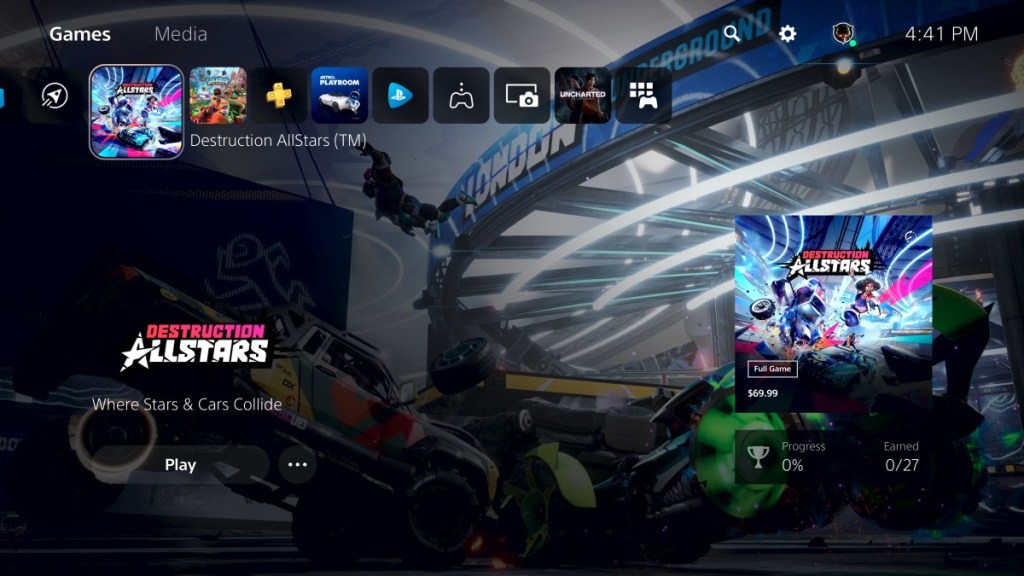
These days when you buy a new console, there’s an expectation that there will be a unique experience outside of just playing video games. The PlayStation 5 plays it safe in this regard, offering a cleaner and faster version of the last console’s UI and UX with a few notable additions. The homepage is a more stylish and crisp iteration of the last, with smaller and smoother icons taking up less space on screen, leaving the bottom 2/3rds of the screen available for game info and a stylish piece of art. Themes are gone this time around, but it’s hard to imagine how they’d pull that off given the fact that games now take up the whole screen and play their own music when scrolled over. All the way to the left of the Home Screen is the store, which is mindblowingly quick and easy to navigate relative to the PS4. There’s no loading screen, no separate executable, it’s a menu like anything else, laid out conveniently for your purchasing pleasure. It seems obvious that they’d make the money-spending part of the console the easiest to use, but it’s still a welcome change.
For subscribers to PS+, a service which previously allowed you to play online multiplayer games and receive a couple select games monthly, there is a new tab with a new feature unique to the PS5, that being a list of twenty (at time of writing) of the bigger PS4 game available to play at any time for subscribers. Similarly to PS+ monthly games you only have access to them for the time you are subscribed to the service, but with excellent games like Bloodborne, God of War, Persona 5, and Monster Hunter: World included it’s hard for me to complain.
While not technically a new feature, the PS5’s in-game overlay is far more feature-rich than its precursor, and is now an integral part of the console’s experience. The overlay is split into two segments: the customizable quick action bar and the dynamic cards system. On the quick action bar you can access the home menu, notifications, accessories, and power settings, as well as optional accessibility and streaming settings. New to the console are a game switcher which allows you to hotswap games on the fly, and the Game Base which is essentially the social hub, allowing you to start group chats, send invites, and call friends. A little more interesting is the cards system, which acts as a progress tracker as well as a way to navigate your game. It shows trophies you’re close to obtaining, with statistics and info about what you need to do to complete them, as well as various possible activities which can be immediately warped to by simply clicking the card. The system is also capable of tracking your current objective and progress and, with a PS+ membership, provide you curated video hints and tips to make some trickier puzzles or collectibles easier to complete. It won’t be a gamechanger for everyone, but it’s a great option for users who want to get to the meat of the game faster or who don’t want to make vast traversals across the enormous landmasses that make up most games these days, only to find a single collectible or side mission. All of this is optional, of course, and is up to the developers’ discretion, but if nothing else it’s an interesting example of how the hardware can be used in interesting ways.
Putting the Player in Control
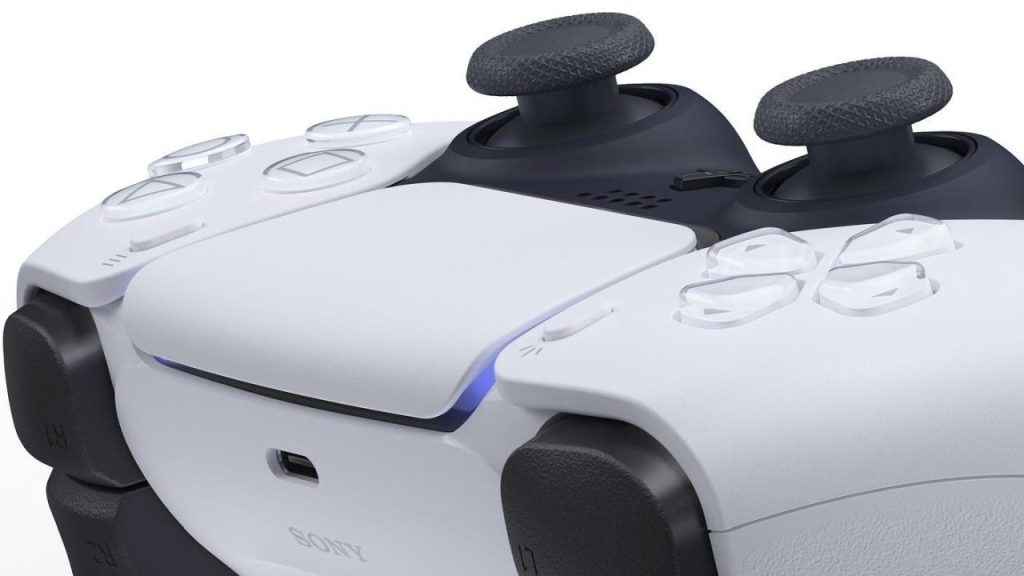
We’ve come to my favorite aspect of the whole system, and the one I was most shocked by: the DualSense controller. At a glance it may look like a simple fusion between the DualShock 4 and the Xbox One controller, and in hand it could certainly feel like that, but a slew of new and impressive features differentiate it enough to fully warrant both the change of name and slightly inflated price tag.
In terms of what you’d expect from a modern game controller, everything it there. The shape and feel is more comfortable without moving any of the buttons from where you expect them to be. The battery life is solid, generally lasting me a normal day of playtime without ever running out of charge. The thumbsticks grip well, and the buttons are responsive, if occasionally mushy. The controller itself feels solid and sturdy, far heavier than previous controllers in the DualShock line. None of these things are what make the controller shine, though. The real magic lies in the haptic feedback, the triggers, and how the two work together with each other and with the internal speaker to enhance the players immersion in some truly incredible ways.
Remember when the Switch was first being shown off and they made a big deal out of “HD Rumble,” only to have a single-digit number of games use it properly? The DualSense seems to be doing the best they can to circumvent that by really going all in on the feature, offering a level of fidelity that’s hard to describe without using tactile adjectives like grainy, metallic, or hollow. In Astro’s Playroom, the pack-in game which acts as a showcase of the DualSense’s capabilities, the controller responds faintly to every step you take, making slight but noticeable alterations to the texture as you walk over different surfaces. Walking through a sandstorm will cause the controller to shake in ways that feel precisely as if it’s being hit with individual grains of sand, and walking through the rain will make it feel as though individual raindrops are falling on different areas on the controller. It’s a difficult feature to explain but believe me when I say that it’s truly a gamechanger for most of the games that use it, and it makes playing games that don’t use the feature feel empty.
The other most important element is the triggers. If you’ve ever used a Nintendo GameCube controller you’ll already have a decent frame of reference for what this thing is doing. On that controller the triggers were analog, with a button at the end that would click in and be a separate input. The DualSense controller is able to create those “buttons” anywhere in the trigger’s depth at any time, in interaction with the software. This allows for something like the rock-climbing minigame in Astro’s Playroom, where grabbing onto rocks has you breaking past a thin “barrier” in the trigger, but grabbing onto cracked rocks requires a lighter touch, so as not to grab too hard and break them. Another example is drawing a bowstring, where the further you pull the harder it gets to hold the trigger down.
As a whole, the controller combines what made the DualShock 4 so reliable with some truly unique new features to create a controller that has me questioning what the Xbox Series will do going forward, and has me anticipating their interpretation of these ideas in their seemingly inevitable second controller. It’s a major selling point for the system, and something that unfortunately you kind of have to try to understand.
A Question of Value
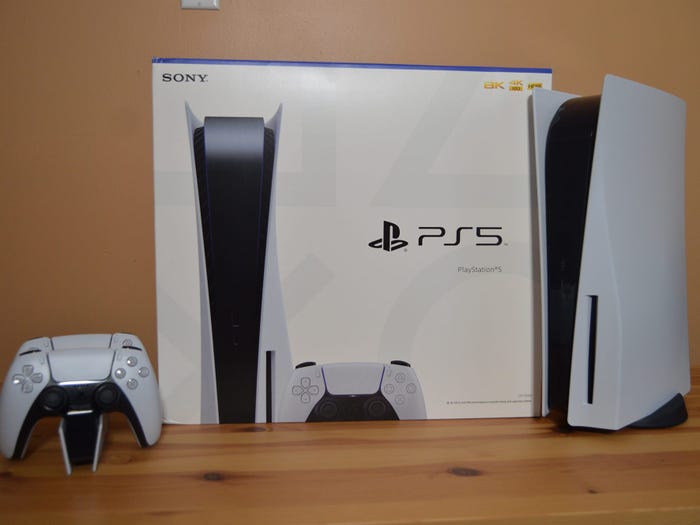
Ultimately, I love my PS5. I think it’s an absolutely incredible system that pushes the boundaries for console hardware in some very exciting ways. For me, it was absolutely worth the $500 price point, and I can see it lasting me years with no issue. Unfortunately, it’s more apparent than ever that purchasing a $500 piece of hardware isn’t something that most people will be able to justify. In a time where income could disappear at the drop of a hat, if it hasn’t already, I struggle to recommend the console to anyone but the most financially secure or the most hardcore of players. When I purchased my console on launch day I was in a significantly more financially secure spot than I am now, and if it weren’t for the fact that I don’t yet have bills or rent to pay, I would probably regret my purchase far more. Ultimately your decision on purchasing the console comes down to what having a new console on release means to you. While the launch games are incredibly good, I can’t help but feel that they’re such a known quantity that it’s hard to justify purchasing a new console just for them, especially when most of them are also available on the PS4.
Overall, while I consider the PS5 to be a stellar piece of hardware, it’s not an essential one. The features are incredibly cool and at times game-changing, but it will likely be a few years before we start to truly see the in-game impact of them. To me, the PS5 is absolutely worth the price of admission, but it ultimately comes down to what you consider to be valuable in your life, now more than ever.
 Writing About Music and Games Sometimes