5. Death Grips – The Money Store
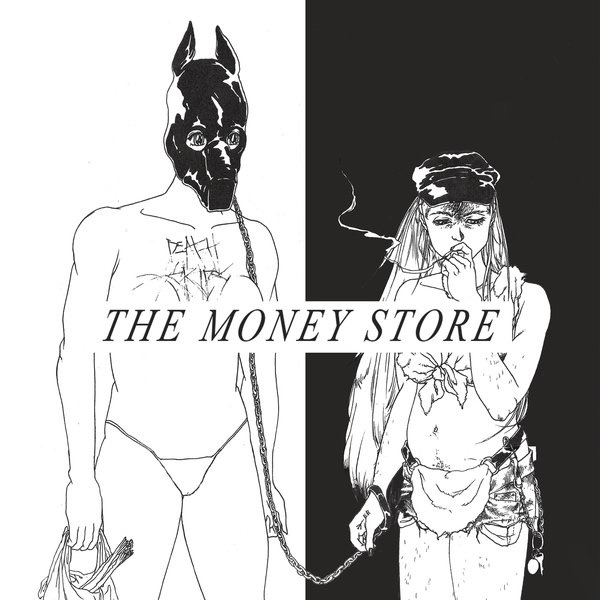
The Money Store is a landmark moment for Experimental Hip-Hop, for Industrial Hip-Hop, and for Music as a whole. Death Grips has been, and still is, consistently breaking new ground in the industry with each consecutive release, but if there was one album to get the attention of the music community, of course it would be their 2012 label debut. How could it not? This album is the perfect balance of catchy hooks, experimental weirdness, genius songwriting, and the aggressive in-your-face personality of frontman MC Ride and drummer Zach Hill (who is one of the most eclectic drummers I’ve ever heard, by the way.) It’s got an energy so distinct that I would hesitate to call it Hip-Hop, as I feel it leans far more towards Punk sensibilities, with the aggressive “no-fucks-given” attitude pervading every element. It’s produced with some of the most impressively unique beats I’ve ever heard, the warping, blasting synths squelching and wailing over strange rhythms that MC Ride blasts his insane “homeless man yelling at you on the street” delivery over, shouting disturbing and senseless lyrics that are actually genius, but only if you look deep into them. So many of the elements of the sound should turn the average listener away and, while they do for many, the undeniable hooks are enough to pull in even the most skeptical of newcomers. From the rapid-fire “Dubble. Dubble” on Double Helix, to the entire chorus of Bitch Please, and the “poppiest” song on the album, the fantastic I’ve Seen Footage, every song is incredibly memorable well after your first listen. Death Grips remains one of the most revered bands to come out of the decade, and it all originates from their breakthrough on this fantastic album. Stay Noided.
Favorite Tracks: Punk Weight | Double Helix | I’ve Seen Footage
4. UBOA – The Origin of My Depression
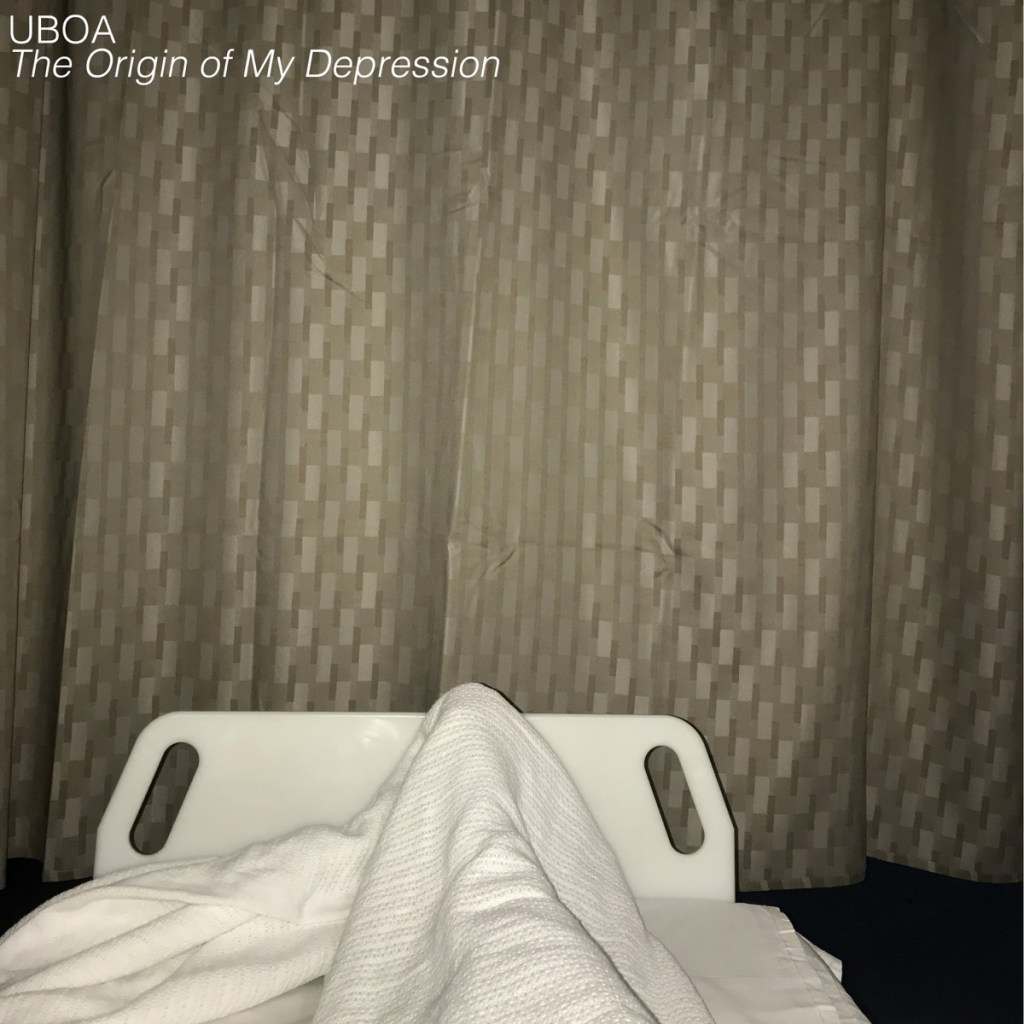
I’ve sat here staring at this blank page for an hour now, trying to find a way to describe this album that surpasses what I wrote when I gave it #1 in 2019, but I’m simply unable. This album takes a lot out of me, and I love it for that, but it makes it hard for me to talk about it for long periods of time. I’m going to do something I was hoping I wouldn’t have to on this list, I’m going to copy my description from my previous list. Know that I do not do this out of laziness, but because I feel I had a sense of clarity in writing that segment that I do not trust myself to emulate again, for fear of not doing this beautiful album justice.
Stumbling across this album changed the way I listen to music, and opened me up to dozens of my favorite projects that I would never have found or enjoyed otherwise. It straps you down and forces you to watch as Xandra Metcalfe lays out the experience of depression and anxiety in an unforgivingly brutal and personal way. You watch as the eerie and unsettling pianos and seemingly random sound interpolations gradually evolve into foreboding rhythms, which build and build as you nervously wait for them to snap. Xandra’s vocals are quiet here. They add a texture that beautifully complements the soundscapes on display and, while they are often drowned out by the noise surrounding them, are lyrically impassioned and moving. Even without knowing that Xandra is transgender, every word felt important and meaningful to her, and learning the context afterwards gave a new lens with which to view the entire project. It ties real-world events and experiences to its tonal peaks and valleys, and gives a deeper understanding to the pain on display. That pain rears its ugly head all throughout this project in a similar way to an earlier pick, CALIGULA, with its throat-shredding screams that tear down to the core of your being unrelentingly. The first instance of this is in the Title Track, where a slowly building and terrifyingly dissonant instrumental suddenly reaches its peak with the pained scream of “You, you’re the origin of my depression.” It cuts through like a knife. It’s clean but no less painful. As the record progresses, however, the noise gets harsher and more aggressive and we begin to see influences from Industrial and even Doom Metal. Sometimes it builds gradually like on the track Epilation Joy, where the wind chime instrumentals are slowly drowned as the static noise moves from background to foreground naturally. Other times, like on the devastating Please Don’t Leave Me, it all hits at once. With only a small gasp as warning, the listener is hurled into a cacophony of mechanical blasts of energy, like bullets from a gun, before being hit with what is possibly the heaviest passage in any album I’ve heard all year. The crushing march of industrial machinery slams into you like a club, beating you over and over until suddenly it’s over. You’ve survived for now. The 6th track, An Angel of Great and Terrible Light, is my personal favorite. Xandra lays down masterful, impactful, and revealing poetry over a beautiful, coherent instrumental driven by pounding drums. Like the other tracks, it eventually builds to a devastating climax, but this one feels more measured, more controlled. Xandra has learned to control her pain, and use it as a tool. The screaming is still there, but it’s fainter and less aggressive. The final track, Misspent Youth, is acceptance. The pain isn’t gone, and it tries multiple times to break through across the 10 minute runtime of the track, but it’s held back. It’s not triumphant, it’s not definitive, but it still feels decidedly victorious. The Origin of My Depression is a musical landmark in the Noise genre, and one of the most impactful albums I have ever heard. It’s harrowing, abusive, and not for the faint of heart, but no album meant as much to me in 2019 as this one.
Favorite Tracks: An Angel of Great and Terrible Light | Please Don’t Leave Me | The Origin Of My Depression
3. Death Grips – Bottomless Pit
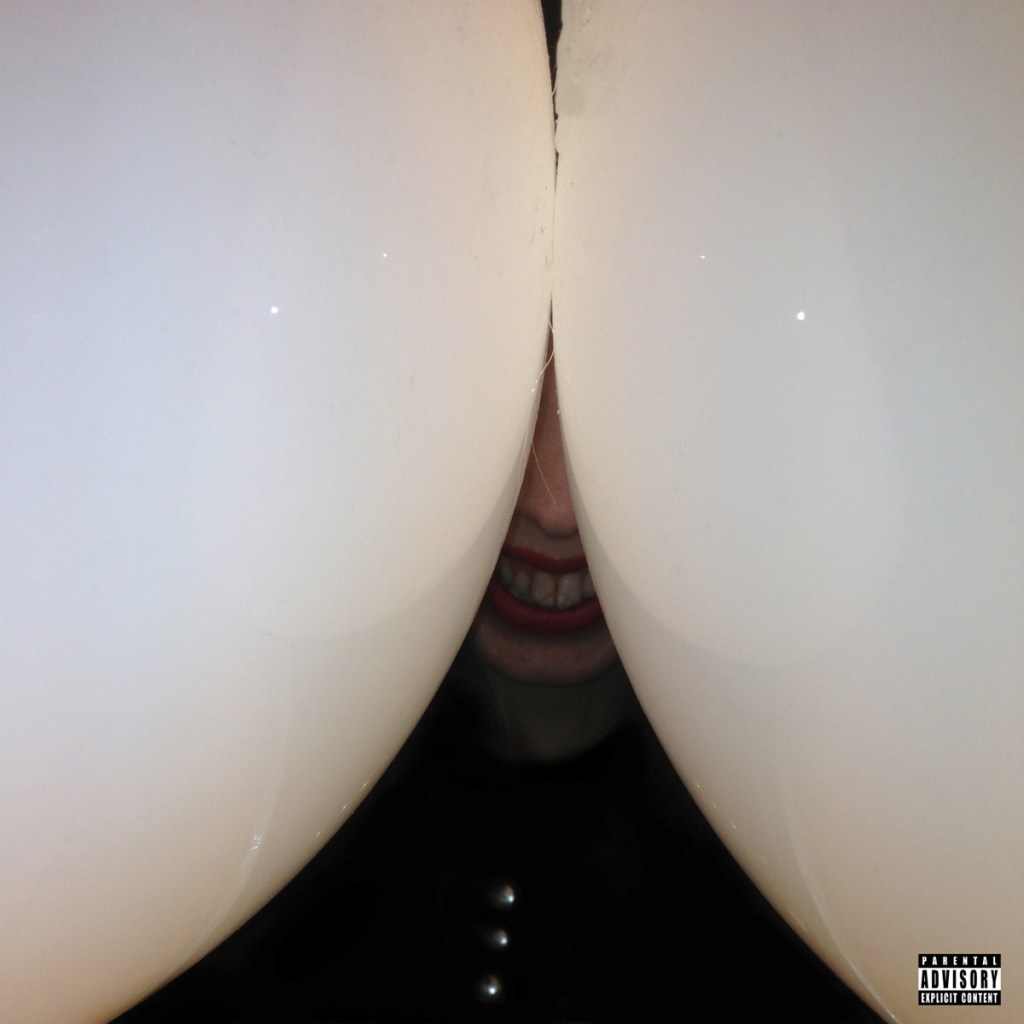
Take everything I just said about The Money Store earlier, now multiply it by 4. This is Bottomless Pit, my favorite record from my favorite new band of the decade. From the opening track, Giving Bad People Good Ideas, the direction of this album is made exceedingly obvious, with a sample of female vocals from singer Clementine Creevy breaking away into an absolutely pummelling wall of distorted guitar power chords, Zach Hill’s frantic drums pounding relentlessly, and strangely warped blabbering you come to expect from MC Ride. It’s clear: This is Death Grips’ punk album.
The track Hot Head starts with what can only be described as pure gabber, with Ride literally blabbering over what may be the most chaotic instrumental of their career, before releasing into a surprisingly beautiful arpeggio with more “traditional” Ride vocals. Spikes is an Industrial Hip-Hop banger with strange manipulated vocals in the hook, and bombastic drums from start to finish, and awesome guitar-sounding instrumentation. Warping, Eh and, to some extent, Trash are an interesting take on a more laid-back Death Grips, although it doesn’t last, with each one having something that keeps a sense of pent-up aggression, the squelching rising synths in Warping and the weirdly symphonic production of Trash standing out against the relaxed flows MC Ride puts down. Off-the-wall insane production and performance is this album’s motto, with the insane Houdini, the grinding bass of BB Poison, and the harsh loudness of the title track that closes the record. Lyrically this is Death Grips at their dirtiest, grimiest, and most straight-up disgusting. Three Neighbors In A Good Neighborhood is a shining example, with the hook of “Nylons on veal, Side bitches don’t heal, Your table through my head, My body through your bed,” and the comedically vulgar refrains of “I fucked you in half” on the closing track.
Bottomless Pit is the perfect example of everything I love about Death Grips’ unique and experimental style, and seems almost uniquely catered to my exact preference of musical styles, with Punk, Metal, Industrial, and Experimental Hip-Hop balanced perfectly throughout. Every track is a hit, and it remains one of my favorite albums ever made.
Favorite Tracks: Spikes | Three Bedrooms In A Good Neighborhood | Hot Head
2. Kendrick Lamar – To Pimp A Butterfly
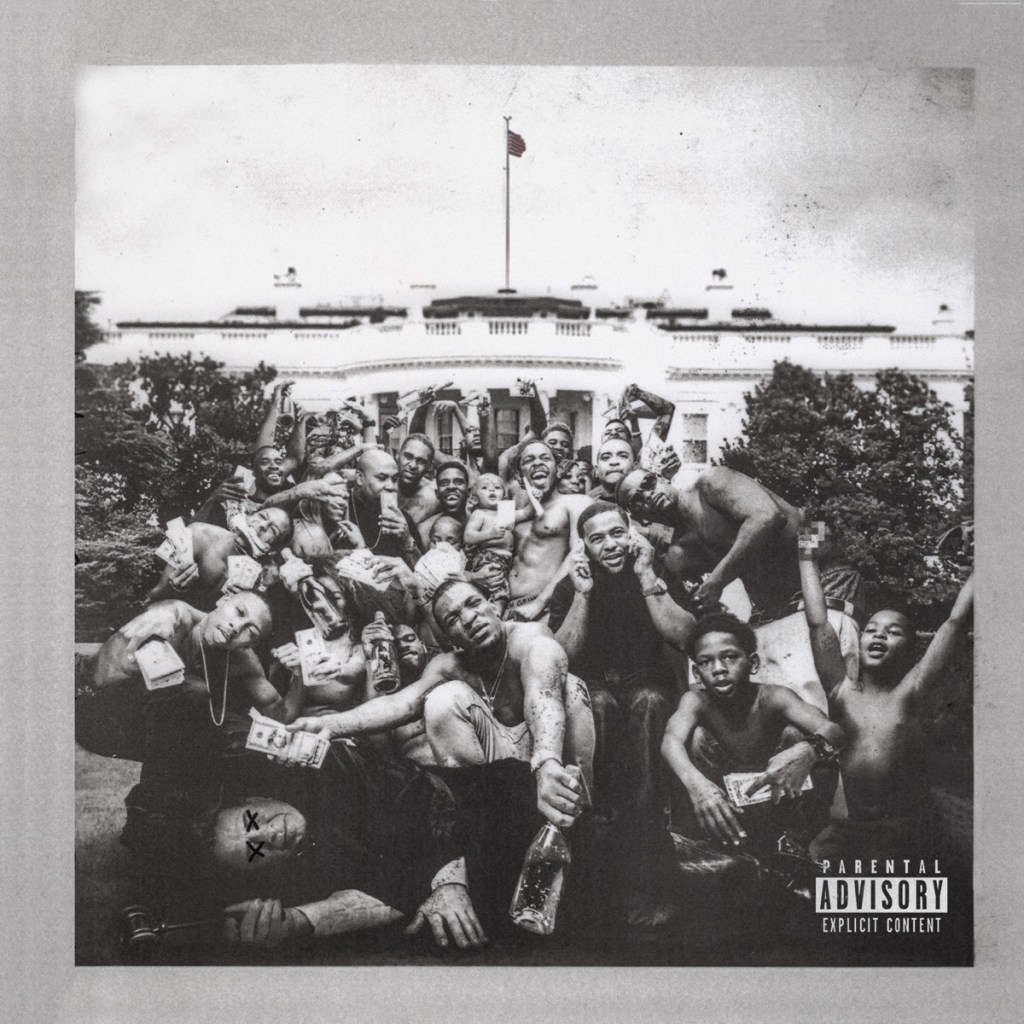
To Pimp A Butterfly is widely regarded in many circles to be the greatest Hip-Hop album of all time, you guys knew this was gonna be here. And who am I to disagree? This is easily my favorite Hip-Hop album I’ve ever heard, and for good reason. It’s the realization of the massive potential I spoke of earlier, on good kid, m.A.A.d city. All the praise I gave that album is applicable here as well, alongside a myriad of other praises I will delve into now. To Pimp A Butterfly is a statement from the perspective of a black man living in America, a universal statement explored from a particularly important point of view. No matter what, the world is going to try to chew you up and spit you out, and it’s up to you to decide if and how you are going to fight it. The sound of this album is a fantastic Jazz Rap combination, executed masterfully with some of the most gorgeous instrumentation and production I’ve heard paired with classic Hip-Hop loops and beats to create a sound that comes across as wholly original. The instrumental performance is stunning, with fantastic sax solos backed by driving pianos, both sampled and live performed, and a feature from legendary Bassist Thundercat on the incredibly sexy These Walls, and the opening track Wesley’s Theory.
The album opens with a fade-in sample of the Boris Gardiner song Every N****r is a Star, a confrontational and shocking intro that perfectly encapsulates the meaning the album is about to communicate. The sample quickly cuts to the aforementioned Wesley’s Theory, a fantastic track about the societal treatment and perception of black Americans and how that shifts for people like Kendrick, who break through and become stars, with a sudden growth of disposable income. This flows seamlessly into the next track, an interlude called For Free? The recurring character of “Lucy” appears for the first time on this track, as a metaphor for America as a whole, and lyrically Kendrick is reflecting on America’s seeming forgetfulness of the fact it’s prosperity is built on the backs of his ancestors, delivered over some fantastic Free Jazz instrumentation that blows my mind every time. Skipping ahead to the track u, we start to see a more introspective side of Kendrick. He’s still angry and holds a grudge against America, but he knows that he’s done wrong as well. The track is a gut-churning display of Kendrick beating himself up on tape, as he delivers the crushing lines including “God himself would say you fucking failed.” This is directly contrasted by the optimistic Alright, an outright genius single that I could go on about forever, but more importantly this track contains a recurring poem that progresses slowly throughout the tracklist, something I’ve never seen in a record before, each one hinting towards the next track and tying together the theme of the record.
I will leave the rest of this record for you to discover, though I may do a longer write-up some day. What I can say is that this album has cemented Kendrick Lamar as my favorite Hip-Hop artist of all time, and honestly the competition isn’t all that close.
Favorite Tracks: Alright | How Much A Dollar Cost | i
1. Swans – To Be Kind
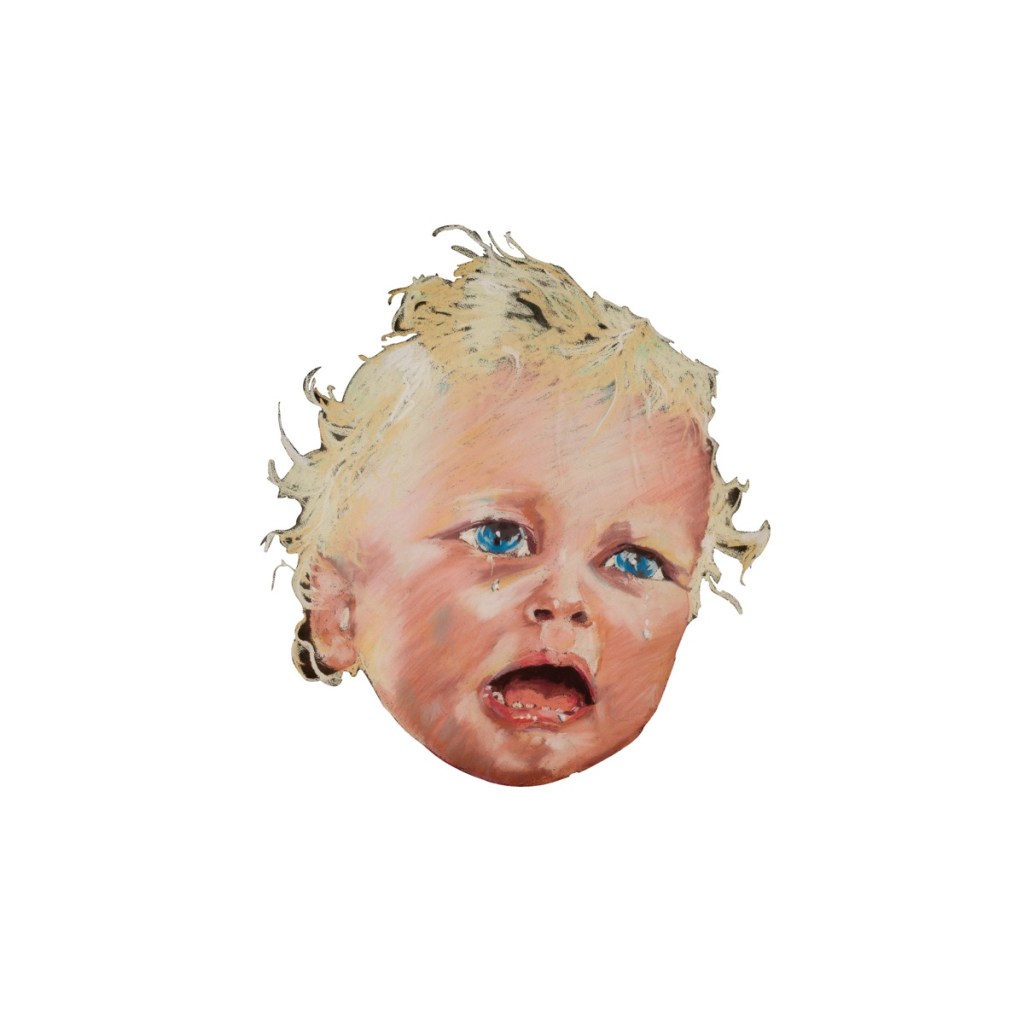
How could a band possibly top such a monumental success like the one Swans had on The Seer, which I spoke on earlier? With every eye watching them, waiting anxiously for whatever their next project was, what did Swans do to meet those expectations? Was it possible? The placing at the top of my list should already tell you the answer to that question, but let’s take a look at what they actually did to get there. To Be Kind is a Post-Rock album, but I think it’s more than that. To Be Kind is a Post-Rock album that deconstructs and rebuilds everything that Post-Rock has ever stood for, ever meant, only to tear it back down again in an atomic blast that blinds anyone who witnesses it. It takes the mere concept of Rock music as a whole and rips it apart, piece by piece by piece, until it’s been shredded down to an atomic level, and then pulls those pieces back together into singular riffs and repeating structures, exhausting and exploring them to the most granular of their potential, before burning them to ash and starting fresh. Sometimes this takes a longer time than others, but by the end of each idea, each concept, there is no room for further curiosity or dissatisfaction, because every idea has been explored and refined to its most fulfilled form. The instrumentals are intricate and complex, but in their droning repetition become utterly numbing, as they gradually grow to peaks that rival the highest mountains, before erupting into a sheer cacophony of instrumental mayhem. If the definition of Post-Rock is “using rock instrumentation for non-rock purposes,” then To Be Kind is the epitome of Post-Rock. The sheer creativity in its composition is practically unparalleled in not only the genre, but in music as a whole.
The album opens with Screen Shot, an 8-minute drone with a single groovy bassline that drives forward through the entire track, and yet never grows stale, as slight instrumental details gradually introduce themselves and the drums appear, violently pushing to the forefront with each hit. As a side note I must say that the drums on this record are the best sounding I have heard on literally every record. They are crisp and pristine, and performed with such unapologetic confidence that I can’t get enough of. Through this opening track Michael Gira makes his mission statement of deconstruction known, with his dissection of lyrics as a concept. Lyrical passages containing two or less words chanted through the entire song, seemingly meaningless and unconnected, but completely enthralling from the beginning to the final chants of “Here. Now. Here. Now. Here. Now.” Just A Little Boy (For Chester Burnett) is a slow and gradual piece, remaining soft for the majority of its 12-minute runtime, with strangely distorted vocals from Gira and ominous laughing samples, until we reach some of our first true explosions on the record at the end. These explosions are a taste of the sheer volume this album reaches, and the abrasive harshness it no qualms displaying. A Little God In My Hands is one of the catchiest songs the band has ever written, and some of their most groovy instrumentation I’ve heard them perform. This brings us to the 34-minute standout track, the colossal Bring The Sun/Toussaint L’Ouverture. Epic in both size and scale, it opens with the same blast of noise exploding over, and over, and over, and over, until you are utterly numb. It goes on for nearly two and a half minutes before finally releasing into one of the most beautiful builds I’ve heard on a track. It grows for close to 15 minutes, but I scarcely notice, enthralled by its beauty, until the tension finally releases into a gorgeous cacophony of sounds, with horses and wind chimes and drums, and so much more. The final track of Disk 1, Some Things We Do, is another vocal-centric track that is exactly as the title states. “We feel, we cut, we hurt, we fuck” all strung together in a way that always feels measured, yet constantly repeats and changes. She Loves Us is a profanely intense song that delves straight into the abyss with some of the greatest guitar riffs I’ve heard in any piece of music, while Gira shrieks profanities with utmost conviction until the very end. Kirsten Supine is the most outright beautiful track on the record, with female vocals and an instrumental straight off a Godspeed You! Black Emperor track. Oxygen is the prominent single off this record, and is perhaps the greatest drum performance I’ve heard this decade, under maniacal howlings of “OXYGEEEEEEEEEN” and a fantastic bassline that just makes me want to move, despite not being danceable in any way. The darkly unsettling Nathalie Neal builds in a spectacular crescendo, and leads into one of the greatest closing tracks ever made, the title track of the record. It’s a slow burn that builds gradually under the atonal singing of “There are millions and millions of stars,” before erupting into a wave of distortion that feels like a peak, yet it grows more. And more. And more. Until eventually it’s simply a repeating wall of blaring distortion, repeated constantly in a sheer apocalypse of noise, the previously described atomic blast that tears rock music down to nothing.
I could close this with my opinion on the record but I feel that its placement here, and the lavish way I described it, do enough to tell you that this album is incredible, and one of the greatest of all time.
Favorite Tracks: She Loves Us | A Little God In My Hands | Oxygen
What do you think? Do you agree? Disagree? What does your list look like? Please let me know in the comments! This took a long time to make so hopefully you enjoyed. Thanks for reading and I wish you all the best in the confusion that is 2020 so far.
 Writing About Music and Games Sometimes