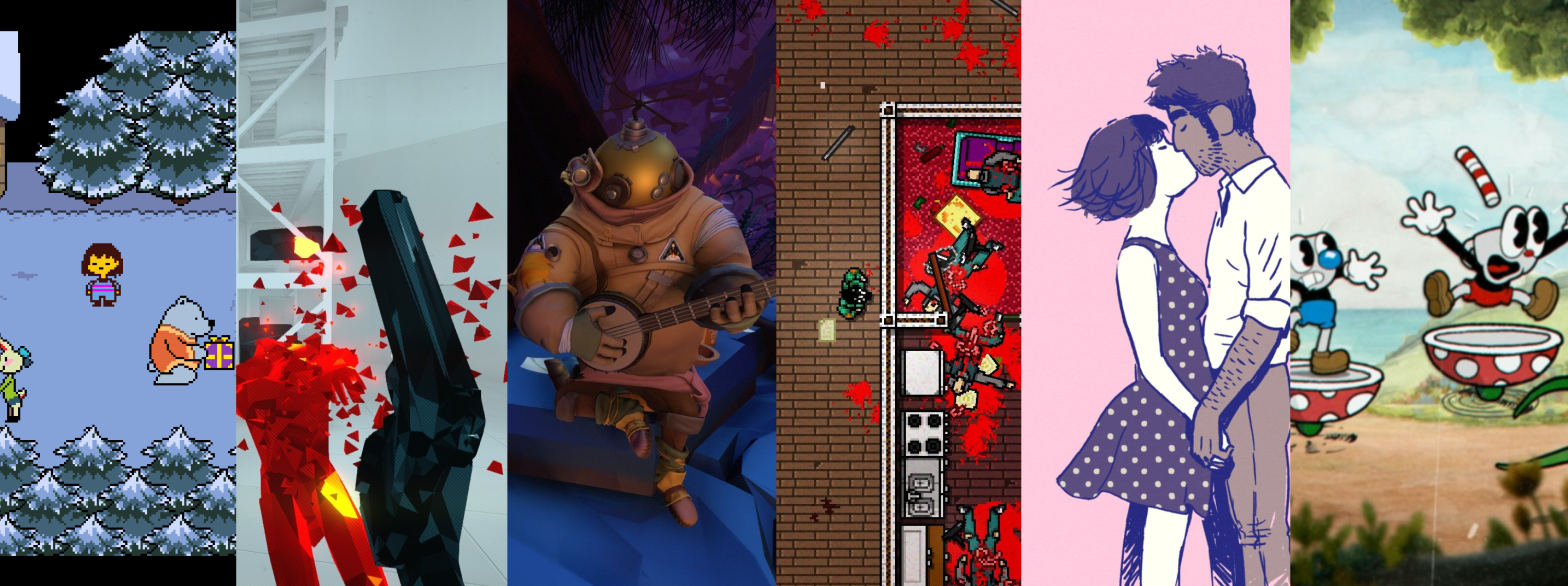
15. Cuphead
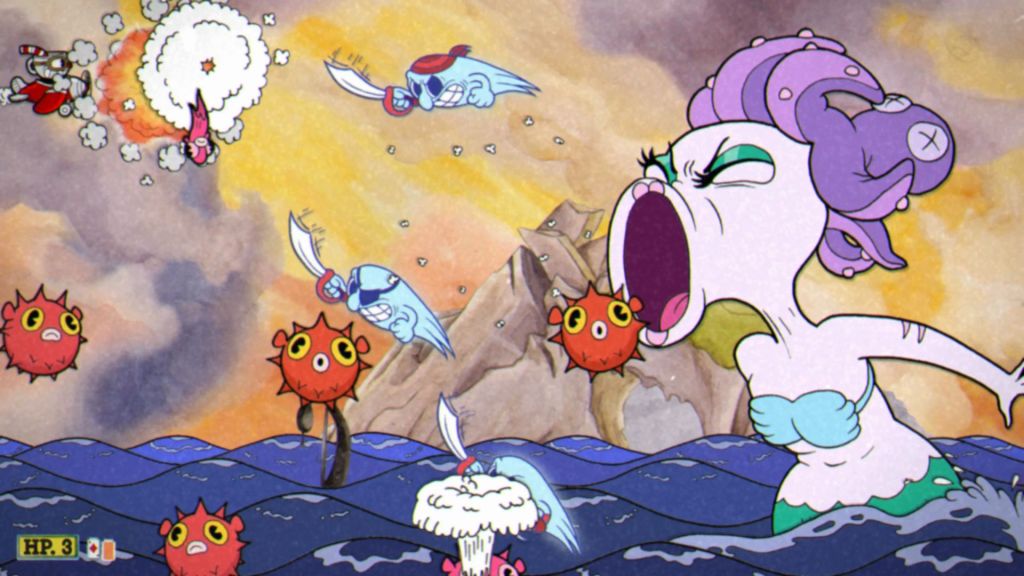
The fact that Cuphead exists feels like a miracle, honestly. From the second it was shown in that 2014 E3 sizzle reel, anticipation was through the roof, refusing to die down until the game finally released in 2017. A single look at the game in action makes it exceedingly obvious why that is. Cuphead doesn’t look like other video games, it doesn’t sound like other video games, it’s in a whole other league. The hand-sketched 30s style animation running at 60fps is a triumphant feat that honest-to-god makes me feel like nothing I create will ever come close, and the catchy-yet-complex jazz themes that make up the soundtrack are some of the most memorable tunes to come from a game in recent memory. Cuphead is stylish, and it knows it. From the finger-snapping protagonist to the very cool shopkeeper Porkrind, and the mere existence of King Dice, everything oozes style from every pore. All of this is without mentioning the gameplay, which is an incredibly difficult yet satisfying take on classic shoot-em-ups like Contra and Mega Man, but in a boss rush format. A majority of the game takes place in fights that, to complete, should only take about 90 seconds. The problem is how difficult they are, some taking multiple hours of repeated tries to get right. Miraculously, though, it doesn’t grow stale by virtue of the fantastic variety in boss mechanics and aesthetics that constantly incentivise you to keep pushing and eventually prevail. Cuphead is the rare game that is just as engaging to look at as it is to play, and that play just happens to be engaging as hell.
14. Spelunky
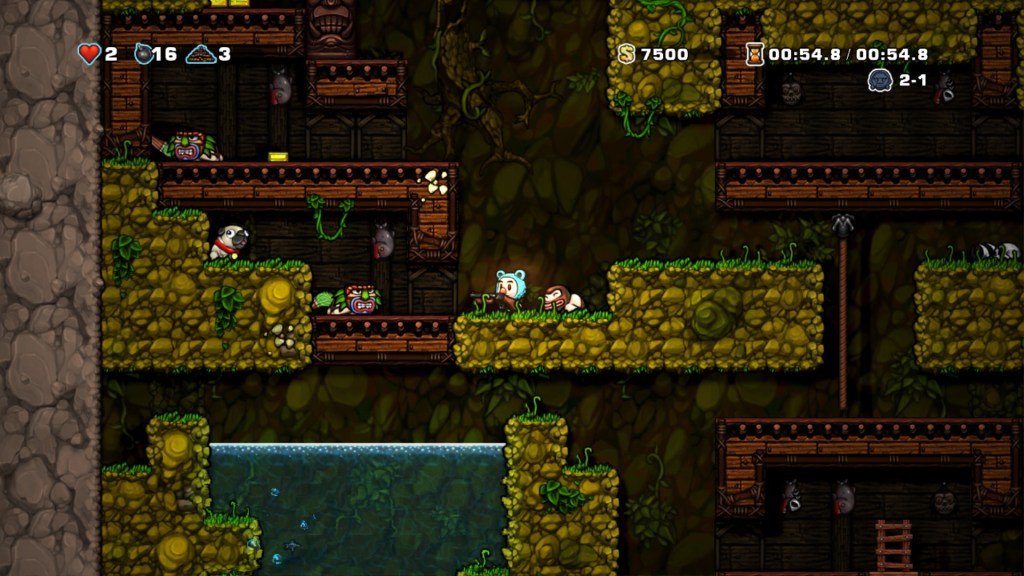
Let’s get one thing out of the way upfront: Spelunky is a bastard. At a glance, it would be easy to write the game off as merely a fun early indie platformer with a hand-drawn art style, perhaps in the vein of Braid. One needs only to take a moment of playing to realize, however, that this couldn’t be further from the truth. The joy in Spelunky is through making mistakes, dying, and learning what you can do next time, only to have that lesson backfire next time as you realize you learned the wrong thing. It’s a mad dash to the bottom of the mine while collecting as much treasure as you can before getting killed and starting over. Few games feel as much like a quest for knowledge as Spelunky, and no run ever feels entirely pointless. Rapid movement speed and a simple but engaging gameplay premise make it unhealthily easy to simply keep playing over and over for hours on end without a second thought. Once you’ve gone down Spelunky’s dark rabbit hole, it’s nearly impossible to escape, and there have certainly been weeks over the past decade in which I found myself completely obsessed by the strange call of its random generation, like a gambling addiction I allowed myself to ignore. Spelunky will ruin your life, but maybe that’s the point.
13. Super Meat Boy
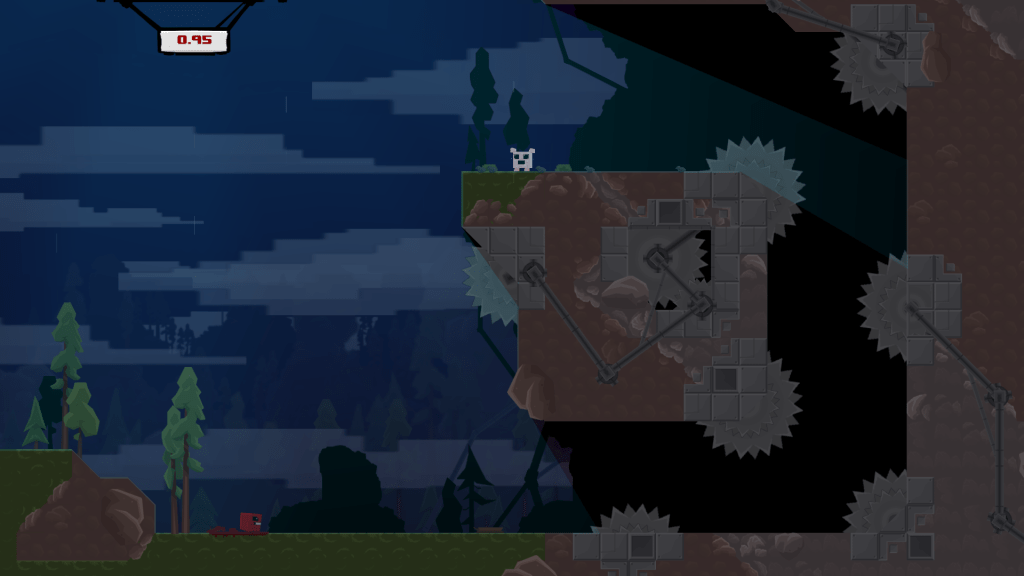
Do you like pain? How about getting so frustrated you throw your controller across the room? Do you enjoy putting yourself through hellish situations for fun? I may have a game that will suit your interests. Super Meat Boy is a 2D platformer, that much is certain. You can call it a “masocore” game or a “splatformer” but at its core Super Meat Boy is just an incredibly difficult platformer. The setup is simple: Dr. Fetus has kidnapped Band-Aid Girl and you, Meat Boy, have to get her back. As this living meat cube, you make your way through a couple hundred stages each lasting between, say, three and thirty seconds. Of course, if you read the entry for Cuphead on this list you know this to be a trap. You, the player, will undoubtedly end up playing some of these levels for dozens of minutes, even hours, beating your head against the masochistic hell that is this game. As Meat Boy, you have an extremely fine-tuned and precise control over your movement. You can sprint at mach speed and stop on a dime, jump up the same wall repeatedly, (a tool that I have religiously called “Meat Boy Jumping” in every game that has used it since,) before bouncing off and swerving left and right as you fall, avoiding the spikes on either side. A game of this difficulty would be extremely easy to bounce off of in frustration, and sometimes the thought is extremely tempting, but the game sucks you back in for “one more try” every time with its instant respawn and trail of blood showing exactly where you’ve moved before. As brutal as they are, the levels are truly some of the best designed in recent memory, with the layouts of some of the more obscenely difficult ones etched into my brain forever. Super Meat Boy haunts me. It’s a nightmare that is nearly impossible to escape, and at this point I’m not sure if I want to.
12. SUPERHOT

In a mere 4 hours, SUPERHOT did more for my perception of shooters than most of the industry had up until that point. The mechanic is simple, so simple that I have to wonder why it took so long to make an appearance: time only moves when you move. With this seemingly small mechanical difference, the entire mindset of the game is shifted to a point where it becomes more of a puzzle game than an action one. There is no confusion or trickery in the goal of SUPERHOT. There are red guys who want to kill you, vibrant against the stark white backdrops of the level, and you have to kill them first in as stylish a way as possible. This dedication to style is cemented in the post-level replays in real time, where suddenly multiple minutes of strategic positioning and execution are sped up to a blistering speed that makes you truly feel like Neo in The Matrix, bobbing and weaving through bullets with inhuman agility. Shooting your gun speeds time up, even if your gun is empty, so desperately trying to remember how many bullets are left in your magazine is a constant, in a way few games make it. There’s an interesting (if cheesy) plot to go along with it too, one that unfolds in a way that may not have surprised me, but it certainly left me satisfied. That’s the theme of SUPERHOT as a whole, for me. It satisfies in every regard, and lives up entirely to the potential of its original demo. SUPERHOT is the most innovative shooter I’ve played in years!
11. Enter the Gungeon
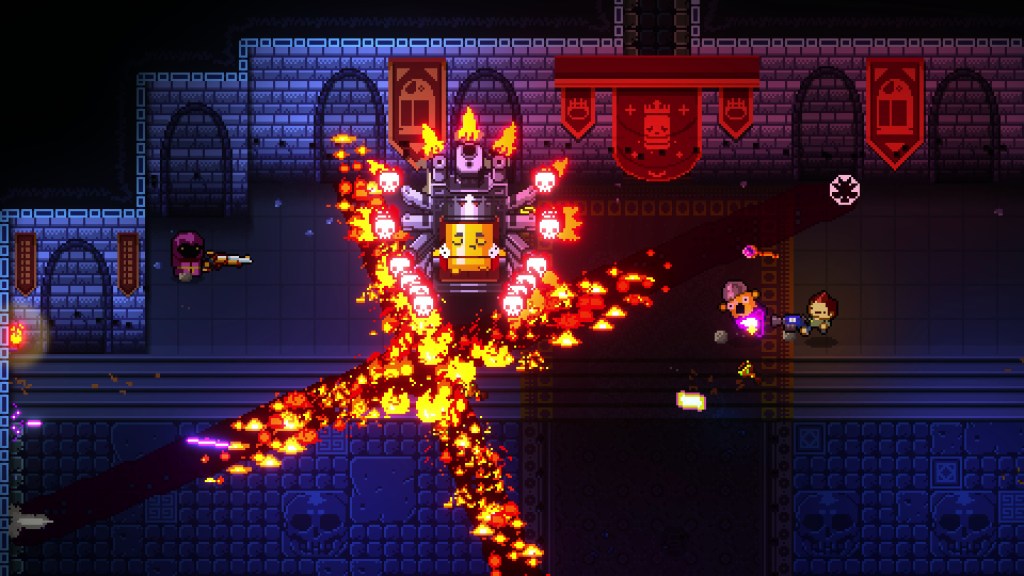
There was a tough decision for me between this game and its predecessor, Nuclear Throne, and from looking at the two it’s very easy to see why. If this list was written when Enter the Gungeon was still in its launch state, Nuclear Throne would have won easily. It had a passion behind it that was palpable while Gungeon seemed to simply take its mechanics and recontextualize them for their own use. The reason, however, that I chose Enter the Gungeon is its post-release content and support. Everything that I loved about Nuclear Throne has been taken and improved massively here, and all the janky and questionable stuff has been either fixed or torn out entirely. This isn’t just a Nuclear Throne clone, though, far from it. Enter the Gungeon in 2020 is a content powerhouse, with more levels, items, bosses, and enemies than most of its contemporaries, and all of its additional updates are free. To top it all off, the game plays better than the aforementioned contemporaries, with fun and unique weapons, a smooth and simple movement and shooting loop, and plenty of small touches that help it stand out. The roguelike sense of progression (don’t worry, we’re almost done with those) is done better than almost any game on this list, and makes every run feel like a continuation of the last, rather than a constant repeated cycle the way others might. The pixel art graphics look great, and the theme of “everything is a gun” is fresh and tonally consistent, but the real reason you play is the loop. It’s a spectacular one and I’m so glad that it’s received the content it always deserved.
10. Shovel Knight
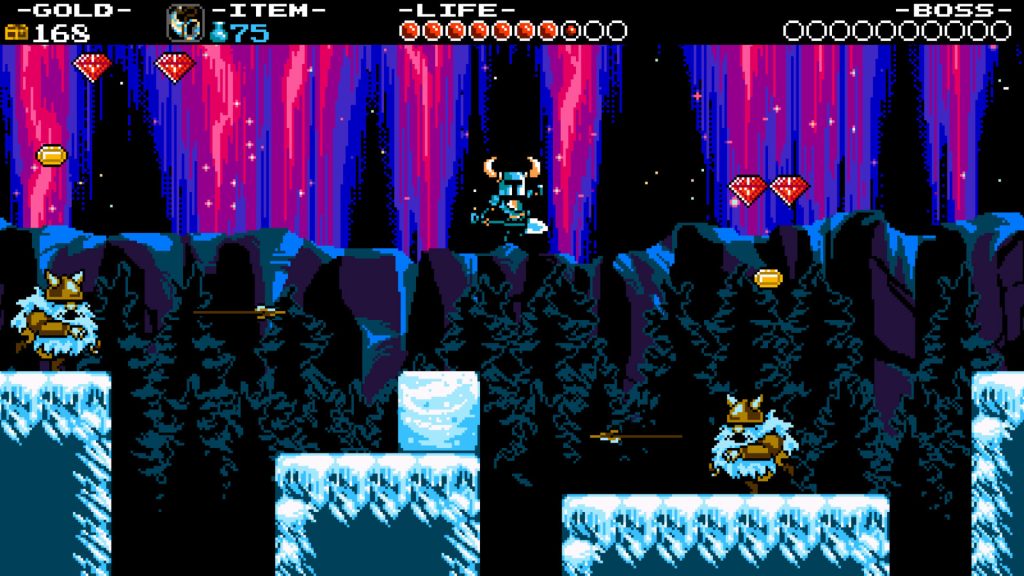
It’s been a running joke in the indie scene for ages that most of the games are just nostalgia bait and without the 80s NES aesthetic, most of them wouldn’t be special in any way. While I’m not inclined to agree with this, there is certainly an element of truth to it. Rarely do you see a game that so wholeheartedly dedicates itself to its aesthetic beyond the visual level in the way that Shovel Knight does. Shovel Knight is a love letter to DuckTales and the first six Mega Man games, with the perfect balance of attention-grabbing nostalgia digging and actual quality improvements to the format. It’s like a relic dug up from the depths of the NES’ library, but one that predicted and used the most appropriate improvements from the three decades since then. From incredibly smooth and personable animations, to some of the tightest controls in a platformer, even to borrowing a death and retrieval mechanic akin to the one popularized by the Souls series. All of this combines into one of the most satisfying uses of nostalgia I’ve seen in ages, one that feels lovingly measured down to the very pixel. This is all before praising the fantastic flow of content that has continued to this day, with massive game-changing expansions that can sometimes even double the amount of content of the game, all compiled into the Shovel Knight Treasure Trove, which is hands down one of the greatest value propositions for any single title available for purchase now. Yacht Club has created a game that refuses to fail in even one aspect, and charms at every turn. It’s far from the only modern “old-school” game, but it’s probably the most fun.
9. Florence
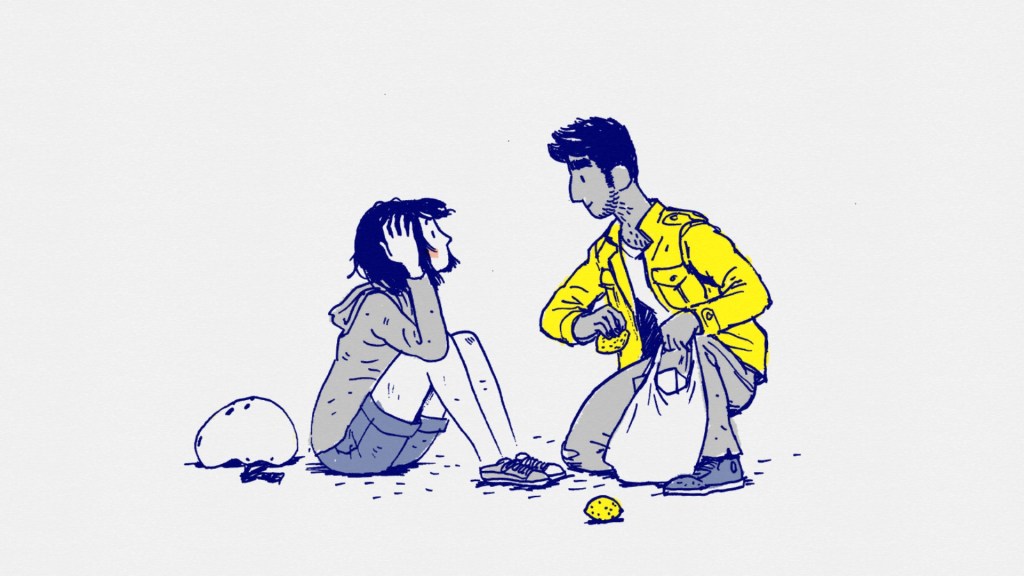
Right near the top of my list, alongside some of the beefiest content powerhouses on the market, sits Florence, a 45 minute mobile game with not a single word of dialogue and extremely simple and rudimentary mechanics. There is a reason why, of course, but I’m not sure I can explain without ruining the entire purpose of the game, so I’ll be as vague and brief as possible. It’s possibly the most effective use of the idea of “mechanics as storytelling,” and manages to tell a gripping and personal story with incredible emotional potency without a single word, and to top it off, it’s absolutely gorgeous. It’s the best mobile game I’ve ever played, and one of the most uniquely powerful stories I’ve experienced. I implore every single one of you to take the $3 hit and play this game, I can promise you it’s worth the ride.
8. Celeste
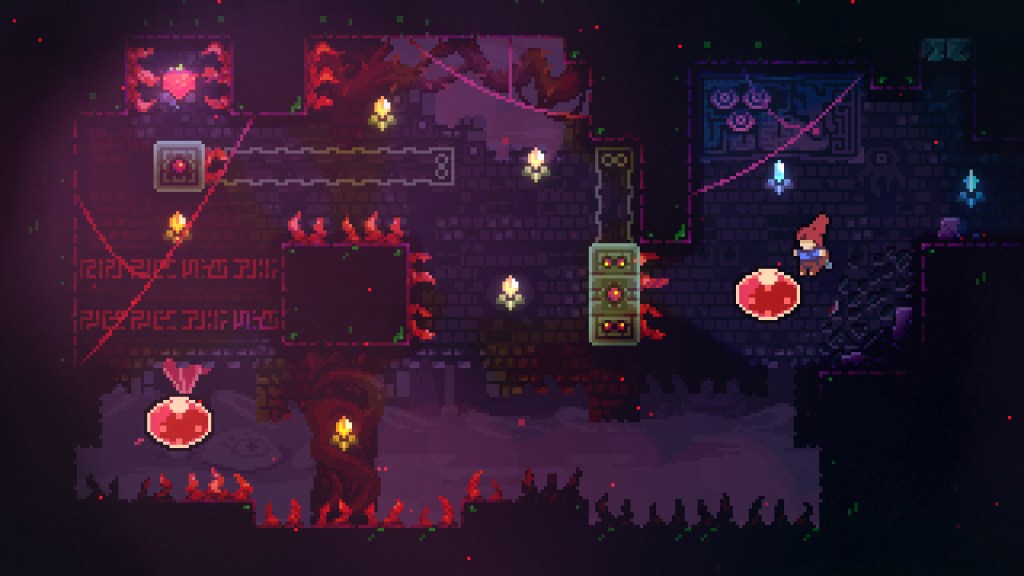
Mental health can be a difficult topic to tackle in Video Games. How, in a medium defined by the control it gives you, can you properly replicate the seemingly unjustified inability to do simple tasks in a way that can get the point across without glorifying or undermining it? Celeste is a game about overcoming obstacles, physical and emotional, and about never giving up. It will continue to beat you down with incredible difficulty reminiscent of the aforementioned Super Meat Boy, a game whose DNA is clearly put to good use here, but it encourages you to go on, whether out of spite or enjoyment. The gameplay feels very similar to the team’s debut, the previously mentioned Towerfall, but with a far more evident focus on the tight movement controls and intelligent level design. Protagonist Madeline feels snappy to control, and paired with tough-but-fair level design that never sets you too far back, it allows for the sense that the player is always in control, and can overcome any obstacle the game may throw at them. It also includes what is very possibly my favorite video game soundtrack ever composed. I am honestly convinced that Lena Raine is an absolute genius musician with a mastery over her craft the likes of which rivals some of the best in her field, and her work is something I return to extremely often, even outside of the game. Celeste is a story about coping mechanisms, about determination, and about accepting who you are. In a time where mental health is as important as ever to speak about Celeste stands at the forefront of proper representation and positive, helpful messages in this budding medium.
7. Outer Wilds

I’m going to be upfront right now: I haven’t even played close to as much of this game as I’d like to. I have no idea how close or far I am from the end, but I will say that in the 5-7 hours I spent with Outer Wilds, something just clicked instantaneously and profoundly in a way I never expected. The more blind you are going into Outer Wilds, the better your experience will be, so I will be describing it briefly in extremely vague terms. The core loop of Outer Wilds is one of pure exploration the likes of which are extremely rare in modern video games. There’s a mystery to solve, but one of the most gratifying aspects of the game is figuring out what that mystery even is. The other core element which will absolutely be a sticking point for some is the 22-minute time loop, after which the sun implodes and everything resets. It could have felt like a mad dash to do as much as possible in an incredibly short time period, but in practice Outer Wilds becomes an exercise in acceptance. Unlike some games with timers, particularly The Legend of Zelda: Majora’s Mask, the time constraints don’t feel like a source of stress, but a way to keep the exploration constantly moving and progressing, and gives you just enough time to let some of the truly mind-blowing visual setpieces settle in without lingering too long. Of all the games I look forward to returning to, this is the one I anticipate completing the most, and I cannot stress the quality of its exploration and the genius of its design enough.
6. Dead Cells
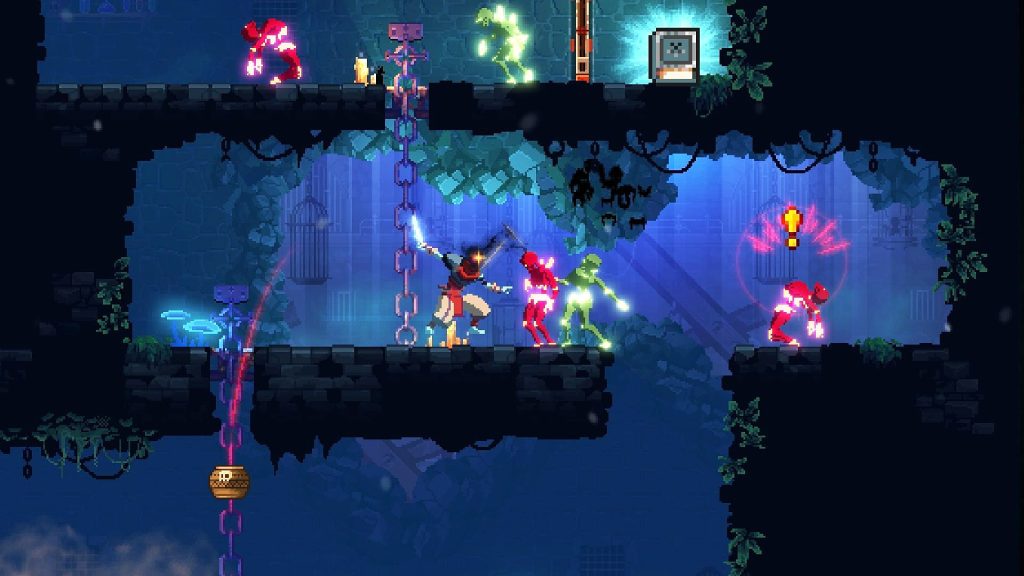
On a list so full of both Metroidvanias and Roguelikes, is it really any surprise that Dead Cells, a blend of the two genres that pulls the best parts from each, with a slew of other design tricks borrowed from all across the medium, is so close to the top? There’s no two ways about it, I think that Dead Cells is the best roguelike ever made, and one of my favorite Metroidvanias as well. Right from the get-go the player is subject to what is very possibly the greatest 2D combat system ever put into a non-fighting game, with a lightning pace centred around dodging past enemies and pummelling them as fast as possible with a massive variety of unique weapons, melee and ranged. In a lot of ways, I love it for the same reasons I love FromSoftware’s Bloodborne. Dead Cells’ combat, like Bloodborne’s, is a refinement of its contemporaries that, through subtle mechanical changes, demands a significantly more aggressive approach from the player, and achieves a flow state with a level of elegance nearly unparalleled by any of its competitors, a dance of dodge rolling, animation reading, and blow-trading that never ceases to entertain, from hour 5 to 50 and beyond. The sheer amount of modifiers the game offers to allow the player to increase the difficulty however it pleases is a wonderful nod to those who want to continue being challenged for as long as they please. On an initial playthrough, it may feel like Dead Cells has a substantially lower amount of content than other roguelikes on or off this list, and while that may be true on a technicality, it’s made up for in the incredible amount of curation that goes into every single item, and the sheer amount of care and polish on display in every frame. From the show-stoppingly beautiful and fluid animation to the distinct and unique color palettes from level to level, it all screams passion and a pure love for the product, and the result is one of the most purely entertaining video game experiences in recent memory, and a game that will hopefully continue to captivate for years to come.
 Writing About Music and Games Sometimes
One thought on “My Top 25 Favorite Indie Games of the 2010s”