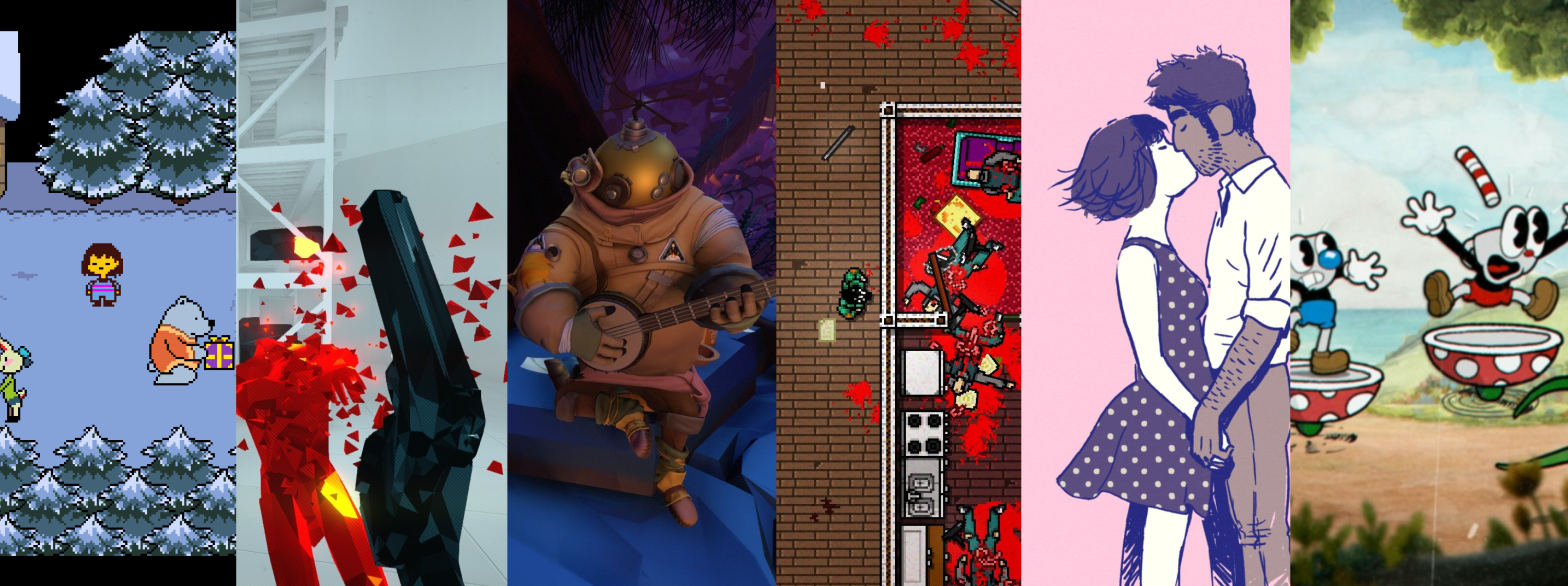
5. Undertale
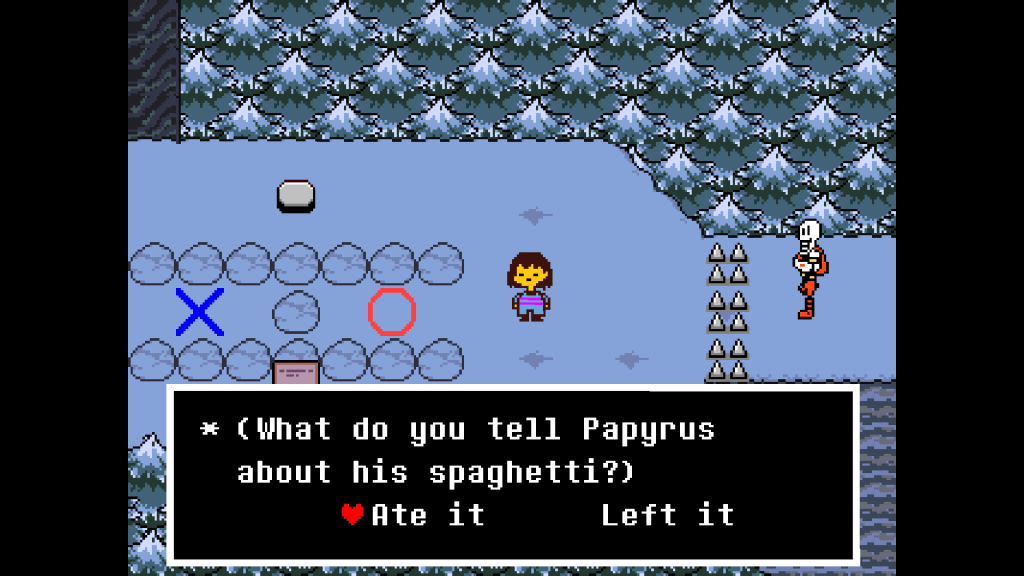
If you had told me three or four years ago that this game would be this high on my list, I would have laughed you out of the room. Undertale and I have a very complicated relationship together, one that started out pretty positive, with me playing the game and finding it pretty unique and charming, but not thinking much of it beyond that. A little while later, though, the game exploded in a way I never anticipated and, as is the case with games that go viral, it was constantly shoved down my throat for about a year, leading to me deciding it was “overrated” out of frustration. Of course, as is evident by its placement near the top of my list, Undertale has grown on me again, and I’m finally ready to sing its praises as the masterwork it truly is. Undertale is a game very clearly influenced by its Super Nintendo-era RPG predecessors, specifically the cult-classic Earthbound. By making its influences so clear, however, it renders the player wide open to some incredible subversions of expectation, and some legitimately surprising moments. Combat is one of these elements that is so innovatively and drastically subverted, revealing a central focus of the game: the ability to choose not to kill people. From the smallest enemy to the biggest, scariest boss, everything in Undertale has an unforgettable and relatable personality to learn about, and every situation has a peaceful solution, however difficult. Allowing and encouraging pacifism isn’t a new concept for the indie game scene, but I’ve never seen it done with such a consistent feeling of choice, and such a devotion to its ideals, such determination to be understood. Of course, you could choose to play it like a “normal” video game, but why would you? Undertale wants to be seen as more than just a video game, and that’s where I feel its greatest hook lies, the determining factor on whether you will like or love the game. It challenges the way you would normally play a video game, and pushes you to make the moral decision, because for the residents of Undertale’s world, this is more than just a playground, this is their entire existence, and they know it. Pair such potent themes with some of the most consistently funny writing and one of the all-time greatest soundtracks ever put into a game, and I would be hard-pressed to think of a reason for anyone not to play Undertale. It’s a masterpiece that escapes the boundaries of video game culture, and I’m glad to finally be able to recognize and express that.
4. Hollow Knight
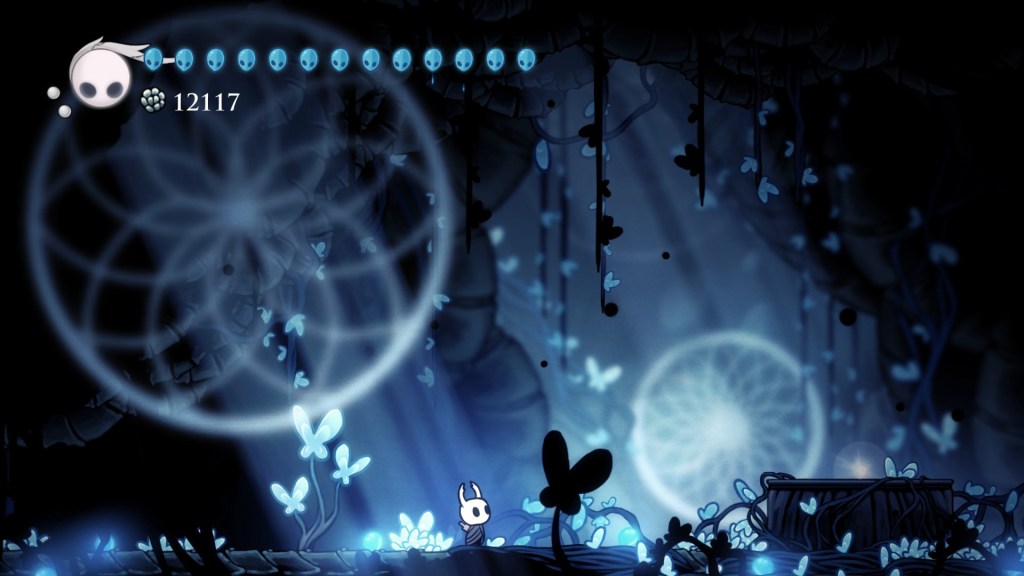
Writing about Hollow Knight in brief is the part I’ve feared most in writing this article. Not because there’s little to say, that couldn’t be further from the truth, but because there’s so much this game does right that it’s impossible to know where to start. I hold no reservations when I say that Hollow Knight is the best Metroidvania ever made, to my knowledge, excelling in every single element in a way that seems nearly impossible. The expansive, intricately detailed world bleeds personality and desolation, whilst being as mechanically varied as it is aesthetically. From the lush vegetation of Greenpath to the dark and oppressive blackness of Deepnest, it all feels painstakingly tweaked to sheer perfection, with an attention to detail unparalleled across both the genre, and games as a whole. In standard Metroidvania fashion, progression is achieved through exploration and finding items/abilities, which open up entire sections of the world and allow you to continue your quest to uncover the mysteries of the kingdom of Hallownest. The plot never makes itself truly obvious, and it takes a bit of digging to get a grasp of what the “story” is, but over time Hollow Knight reveals itself to have an intricately detailed and vastly mesmerizing lore that rivals that of the deepest fantasy settings, with its own twists and turns to separate it and make it unique in and of itself. All of this is without mentioning the gameplay which, while incredibly simple, offers a high enough skill ceiling and a wide enough range of possibilities to allow the game to stand among some of its most revered contemporaries, and with a massive array of unique bosses, the player is never at a loss for where to use these developing skills. The aesthetic and mood of Hollow Knight are where the game’s true genius lies, where all of its elements coalesce into a monolithic, singular work. The beautiful hand-painted backgrounds contrast with the harsh lines of the bug-like creatures populating the world, all backdopped with an all-time favorite soundtrack of mine, filled to the brim with both off-the-wall boss fight bangers and ambient masterpieces, it all comes together beautifully, and the result is the greatest Metroidvania ever made, in every conceivable respect, and only having to pay $15 for it feels like honest-to-god theft.
3. Terraria
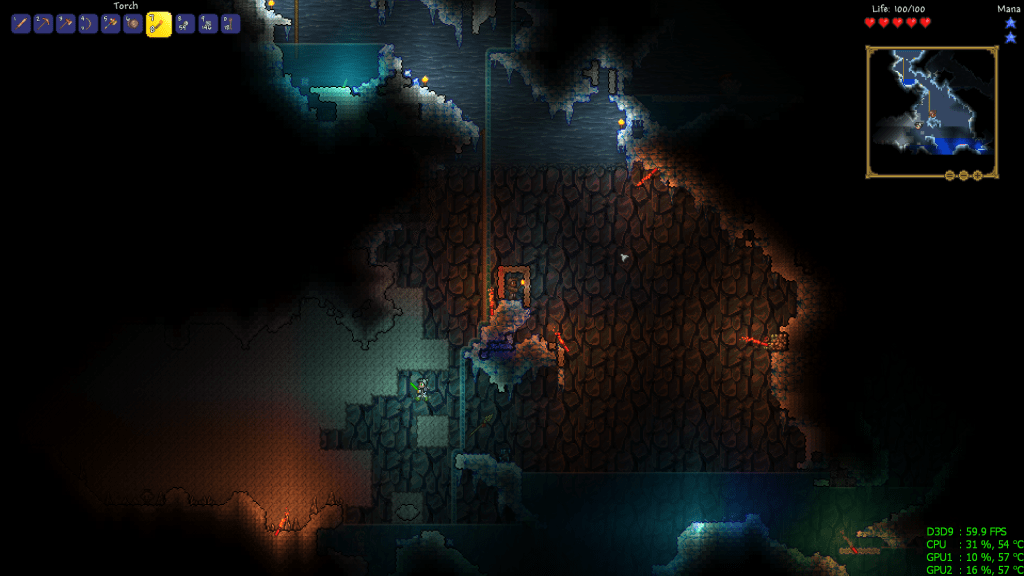
Nearly nine years after the game’s initial release, the Terraria journey has reached its end. With the final update to the game having just been released, there’s a level of catharsis in the knowledge that the game is finished. It’s hard to imagine that anyone reading this far into the article doesn’t already know the game inside and out, but for anyone who doesn’t, Terraria is an incredibly influential 2D sandbox game that has long been described as “2D Minecraft.” At a first glance, these comparisons seem fair, and upon release maybe they were, but where Terraria truly shines is in its mechanical depth and sheer breadth of curated content. Where a game like Minecraft thrives on its structureless progression and the infinite uses for its limited tools, Terraria has a defined progression and set of rules. This may sound like it would put a cap on the level of content, and that may very well be the case, but with 500+ hours in the game myself, I can’t say that’s ever been an issue. This is largely due to the fact that there’s simply *more* to Terraria than many of its contemporaries, with thousands of unique weapons, tools, armor sets, and pieces of equipment ensuring that no world or character ever turns out exactly the same.
Where a game like Minecraft is built on the creativity of the player, Terraria structures its core loop around exploration and combat. Mining in Terraria doesn’t feel like mining, it’s a spelunking expedition in search of underground treasures and ancient structures. Monsters are prevalent, and secrets hide around every corner. It is this exploration that represents the core of why I love the game, and what it does so well. Even a decade later it feels like an adventure, like anything could happen, and like I’ll find something new every time I play, because most of the time I do.
There’s so much more I could talk about – the instantly recognizable artstyle, the housing and NPC system, and the awesome boss fights – but honestly the fine details are so numerous and would distract from my main point in describing the evocative nature and place that the game has in my heart. I’ve been playing and loving Terraria almost since its initial release back in 2011, and there’s something bittersweet about it finally being over. I’ve watched as the game moved from a simple 2D Minecraft clone into one of the biggest juggernauts the indie scene and I, despite having nothing to do with its evolution, can’t help but feel a sense of pride in the massive achievement the team at Re-Logic has earned through nearly a decade of work.
2. Stardew Valley
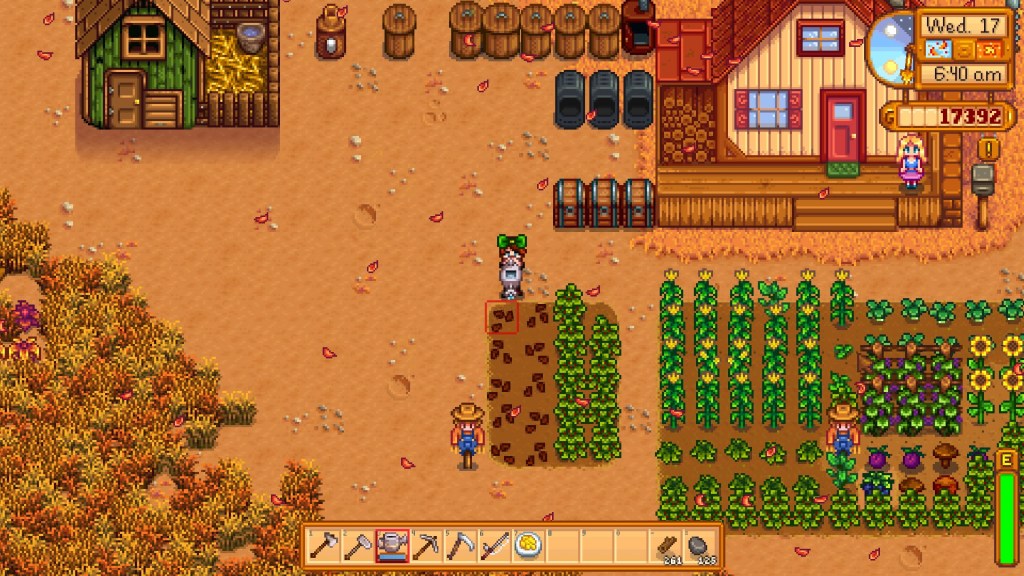
There’s something so fascinating about the story of Stardew Valley, of one individual getting so fed up with their favorite game series that they dedicate themselves entirely to making a better version of that series, and succeeding so wildly that their single game manages to overshadow everything else the genre has to offer. It’s a story you could only see in the indie game scene, and it’s the story of one of my favorite video games ever made. There’s a certain comfort in returning to the quietly beautiful town of Stardew Valley every few months and just living there for a few hours, hanging out with the townsfolk, watering your plants, and going for walks looking for mushrooms and flowers. When I boot up Stardew Valley, I’m not turning on a video game, I’m coming home.
As a spiritual successor to the Harvest Moon franchise, Stardew Valley had a lot to live up to, but very little competition, which gave developer Eric Barone as much time as he needed to get it right. Four years were spent refining and expanding the game’s scope and content, and it shows in the amount of passion and polish in every element, and the sheer refined quality of it all. The moment you step out onto your dilapidated plot of land, the amount of options available to you can seem overwhelming, but you quickly and snugly fall into a groove, with the help of some very useful quest hints pointing you in the right direction. You’ll get into the habit of watering your crops daily, going out into the town and meeting new people, fishing to make a little extra money, and occasionally delving into the mines to bring home some more out-of-the-way materials. Where Stardew Valley’s systems truly come together, however, is in the community center, where your hard work pays off in working towards the goal of completing all the item collections and repairing the community center, receiving increasingly valuable rewards the more you collect. With just a simple goal, one that is never even enforced, the game manages to keep the player interacting with all its systems constantly, and keeps every day hugely different from the last. It is because of this system, along with many others, that Stardew Valley can so easily become an obsession that consumes dozens of hours of life if you aren’t careful, with the ever-alluring promise of more content to discover looming over you every time you finish an in-game day.
It doesn’t stop there, though. Like many of the games on this list, Stardew Valley has received constant and substantial content updates ever since launch, entirely free of charge. I don’t think I’ve ever been so excited about rice being added to a video game, and that’s testament to how invested the game has gotten me over the years. Barone has sunk eight years of his life into Stardew Valley at this point, and shows no signs of stopping, with yet another update currently in the works, and supposedly two other games in early stages of development. Playing Stardew Valley for so long has been a journey, to say the least, and an incredibly personal one. It’s the perfect example of what makes the indie scene so important, and of the reason I love video games as a whole. To me, Stardew Valley isn’t a video game, it’s home.
1. Minecraft
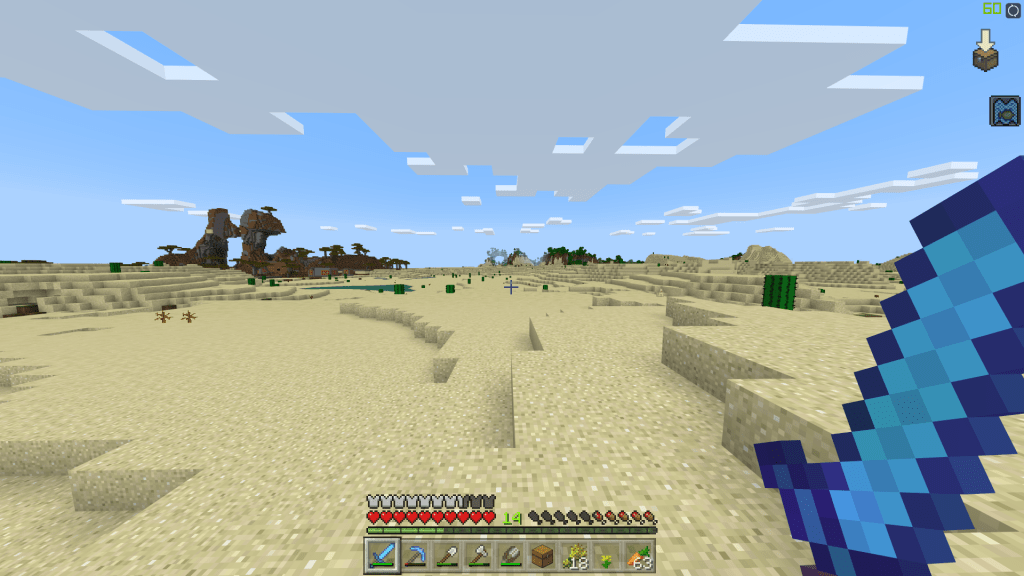
Let’s not kid ourselves, you knew this would be here. Not only is there no game more synonymous with “Indie Games” than Minecraft, (which is ironic considering the fact that I contemplated disqualifying it from the list due to it now being owned by Microsoft,) but I would struggle to find a single piece more synonymous with Video Games this century than Minecraft. Is there even a way to try to summarize what the game is, what it’s done, and the impact it has had? Frankly, I’m not sure. The issue with trying to discuss Minecraft is that I don’t think we’ve seen the extent of its impact yet, and likely won’t for a long, long time. It’s more than a video game, Minecraft is a cataclysmic event that has shaped the world in ways that extend infinitely beyond the realm of games.
I love Minecraft. I love it a lot. Minecraft is, without a doubt, the most important video game I’ve ever played. It is for that reason, however, that I’m ashamed to say that I have basically nothing unique to say about the game or its impact. It’s the definition of a viral game, one that spread like wildfire and has had no shortage of impact since bursting onto the scene a decade ago. However, unlike many viral games, Minecraft utterly refuses to die, miraculously managing to grow its numbers to this very day. It’s a strange phenomenon, one that I’m not even sure I can explain in any meaningful way. Everything about Minecraft, from its now-legendary visual style to its unbelievably obtuse progression system (or lack thereof,) screams “tiny indie game that would never have more than a cult following.” And yet here we are, with a blocky, pixelated world somehow managing to represent a monolith of our culture as a whole. I won’t claim to have any deeper insights into why Minecraft exploded the way it did, but the reason it’s outlasted literally every single one of its viral contemporaries is pretty clear: creativity.
Minecraft offers something that no single game has offered before or since, and that is the ability to boundlessly create whatever you want, however you want, with quite literally the only limit being your imagination. It’s trite, at this point, to use the Lego metaphor, but I’m going to do it anyways. Minecraft is the video game equivalent of a box of Lego, and for about the price of a single moderately sized set, it’s not hard to imagine it outright replacing Lego for a lot of children growing up now and in the future. That sounds like a dystopian reality where all children use are screens to play, and perhaps in some ways it could be, but when my five year old brother shows me the things he’s built, and explains to me what it is, it’s impossible for me to see that as any less valuable than the spaceships I’d build with Lego at his age, and he’s certainly no less proud of them.
All of this goes without saying a single word about the mechanics or actual “game” aspects of Minecraft, and that’s by design. There’s no shortage of detail you could go into discussing the intricacies of the game but, honestly, that’s never been why I love it, and has never been the truly special thing about it. I love Minecraft because it’s something special, something unique, and something important, and a lot of what gives it those qualities goes directly against the established philosophies of game design. Minecraft is important because in barely qualifying as a video game, it forced us all to question what a video game is, and the industry hasn’t been the same since.
 Writing About Music and Games Sometimes
One thought on “My Top 25 Favorite Indie Games of the 2010s”